
Certificates of Analysis (COA) for Research Peptides in Canada
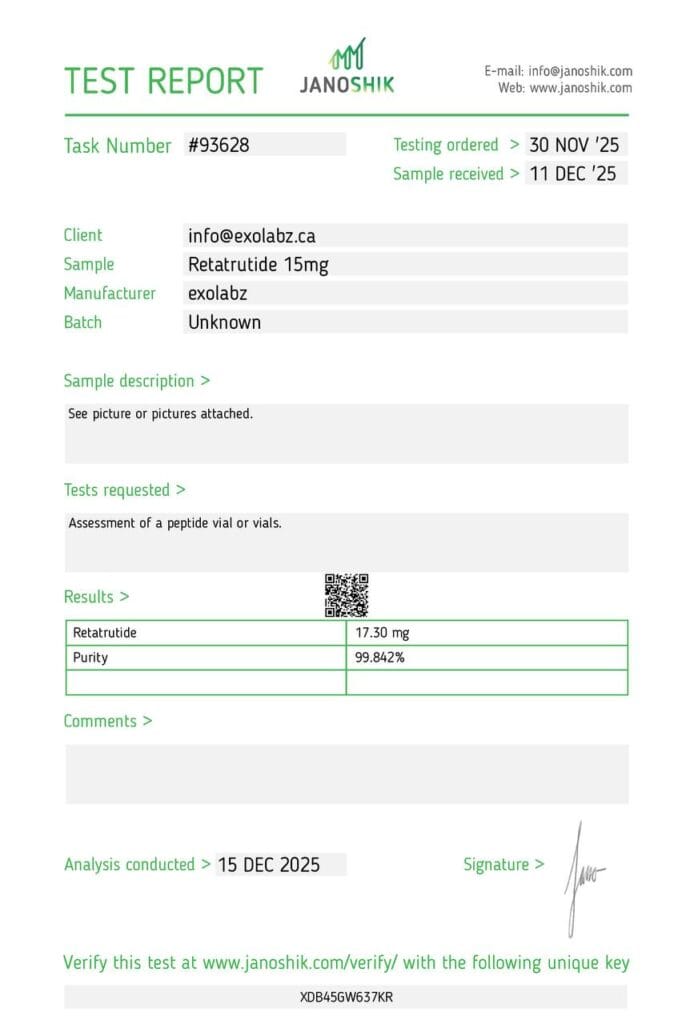
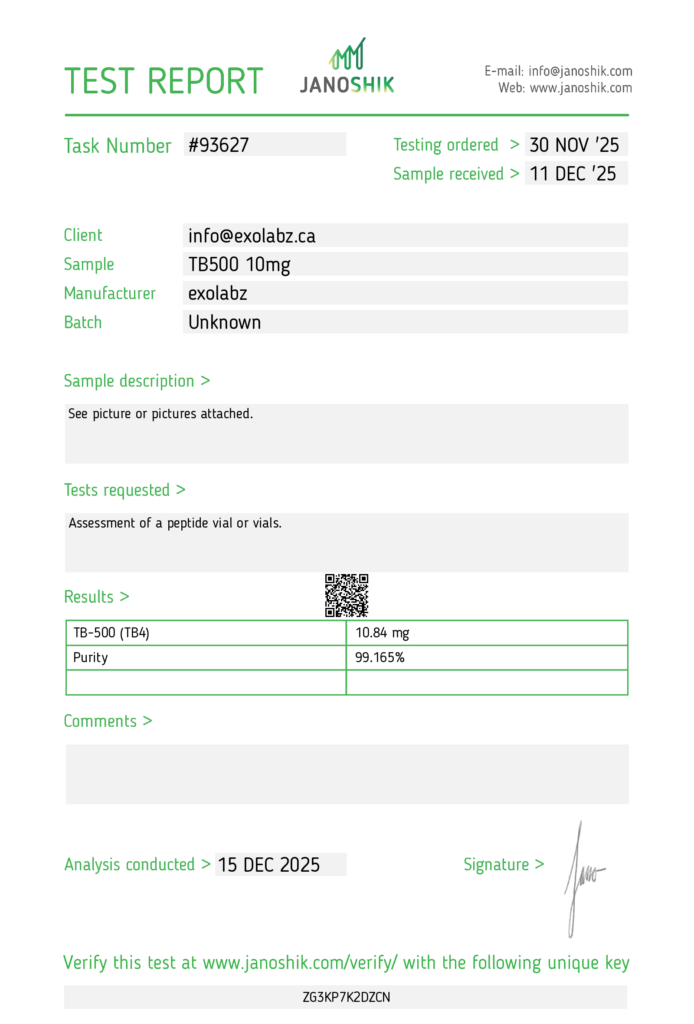
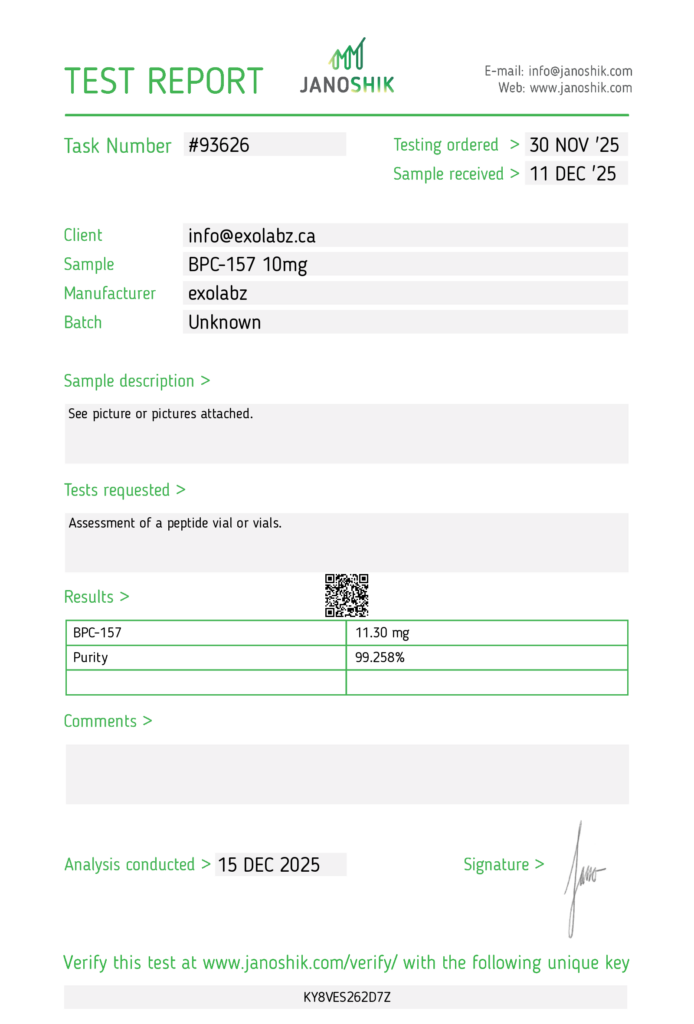
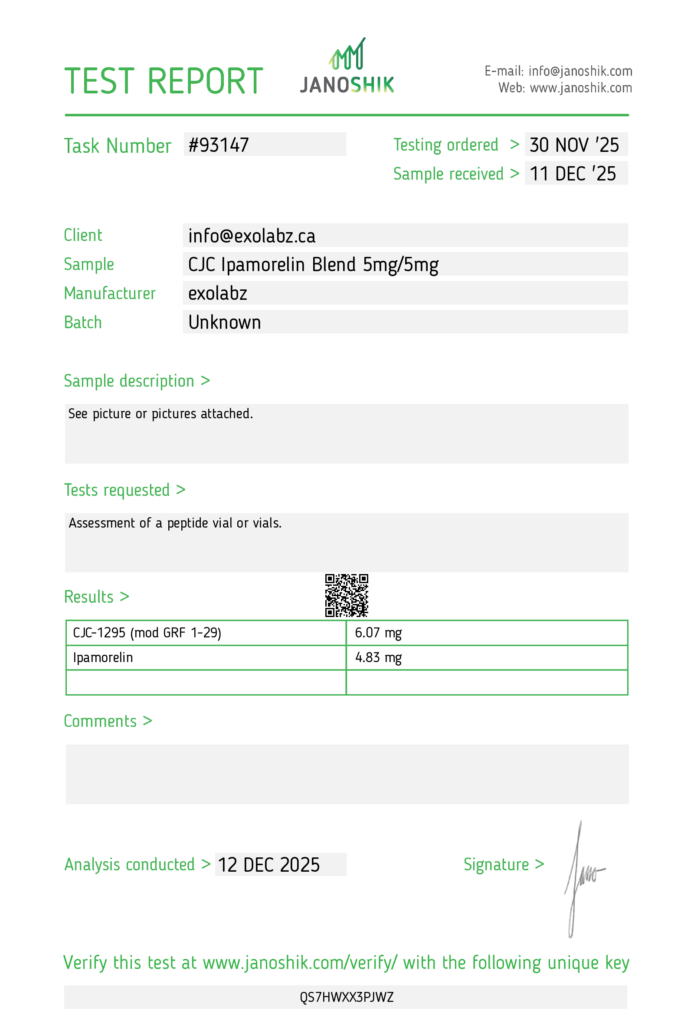
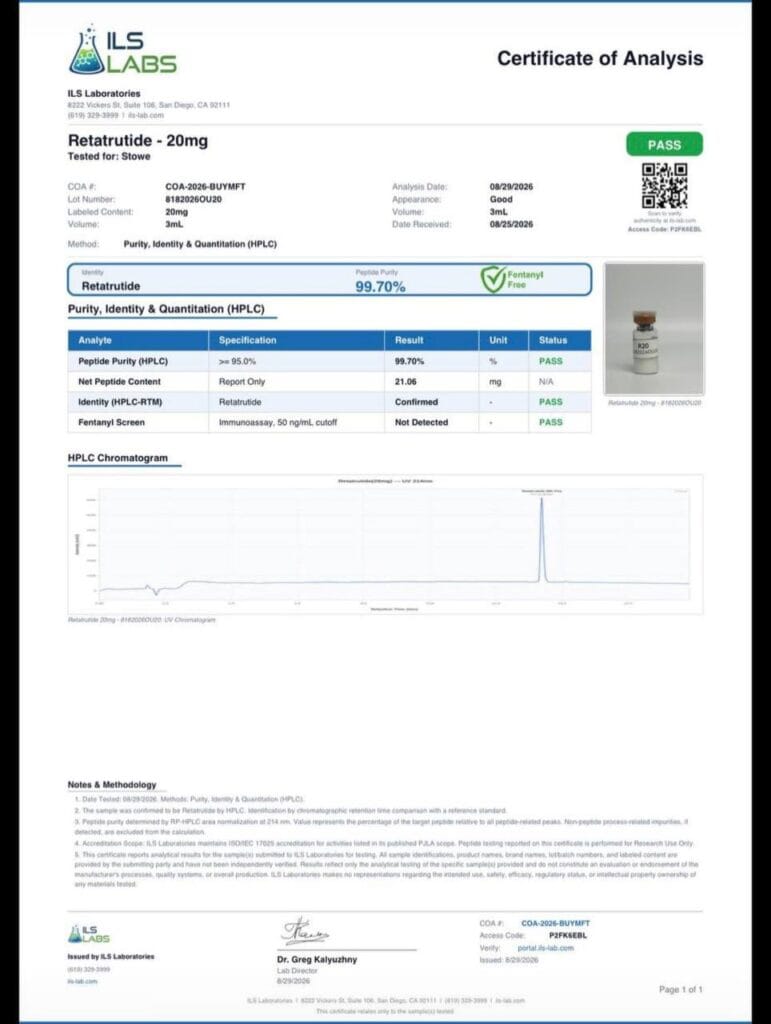
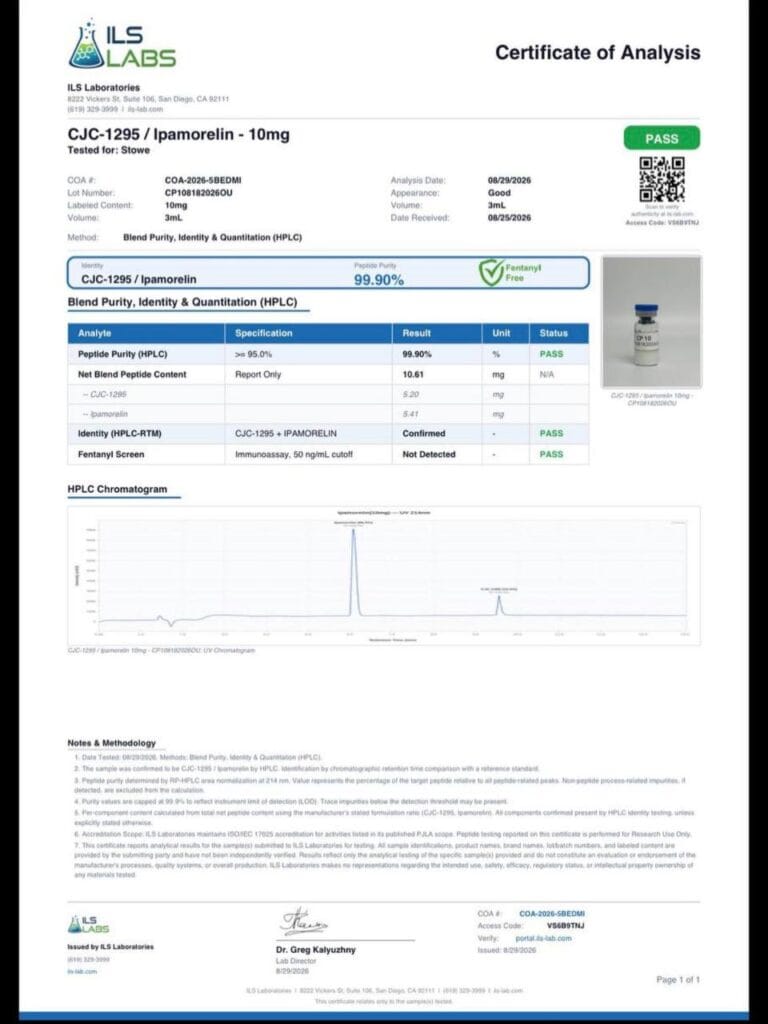
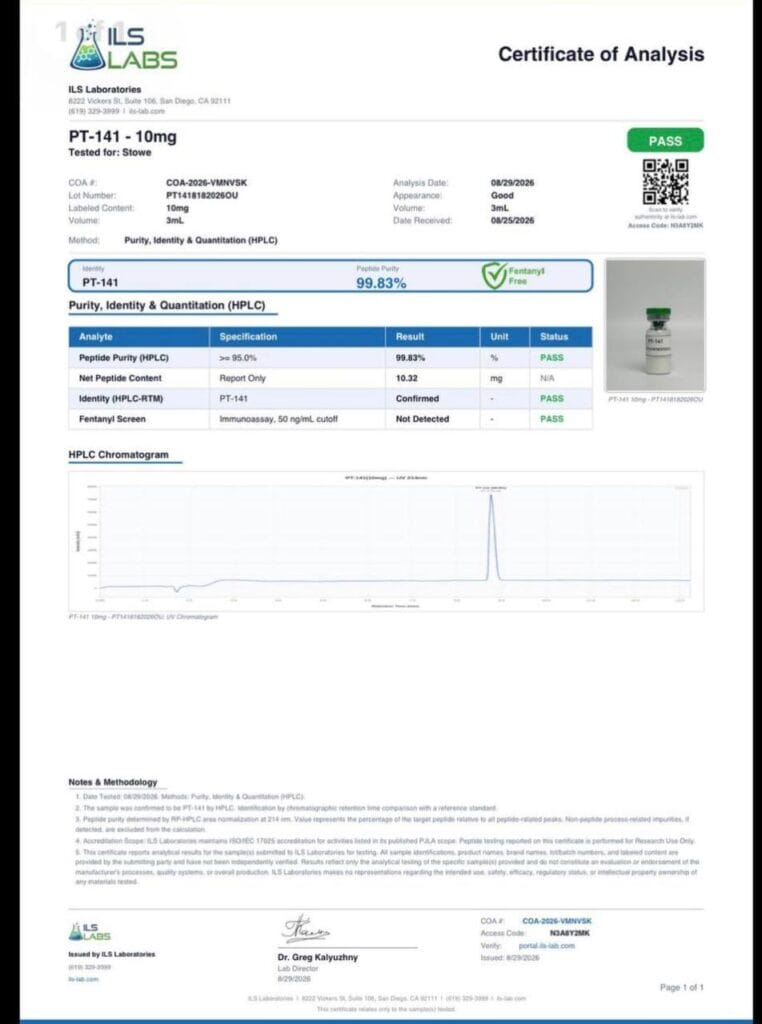
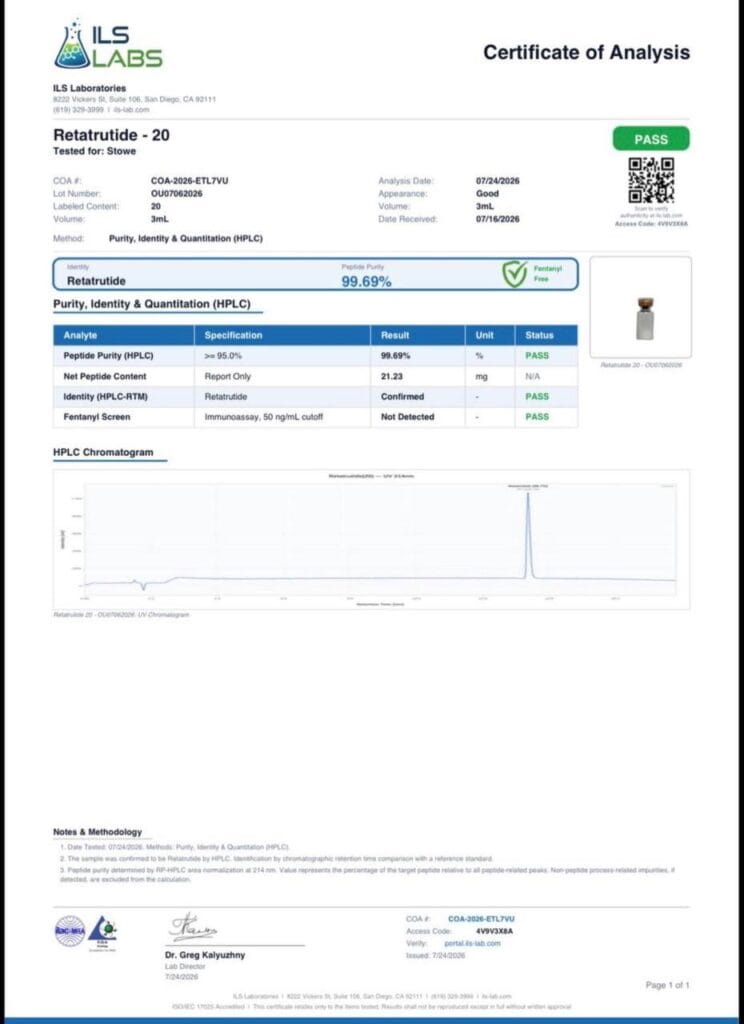
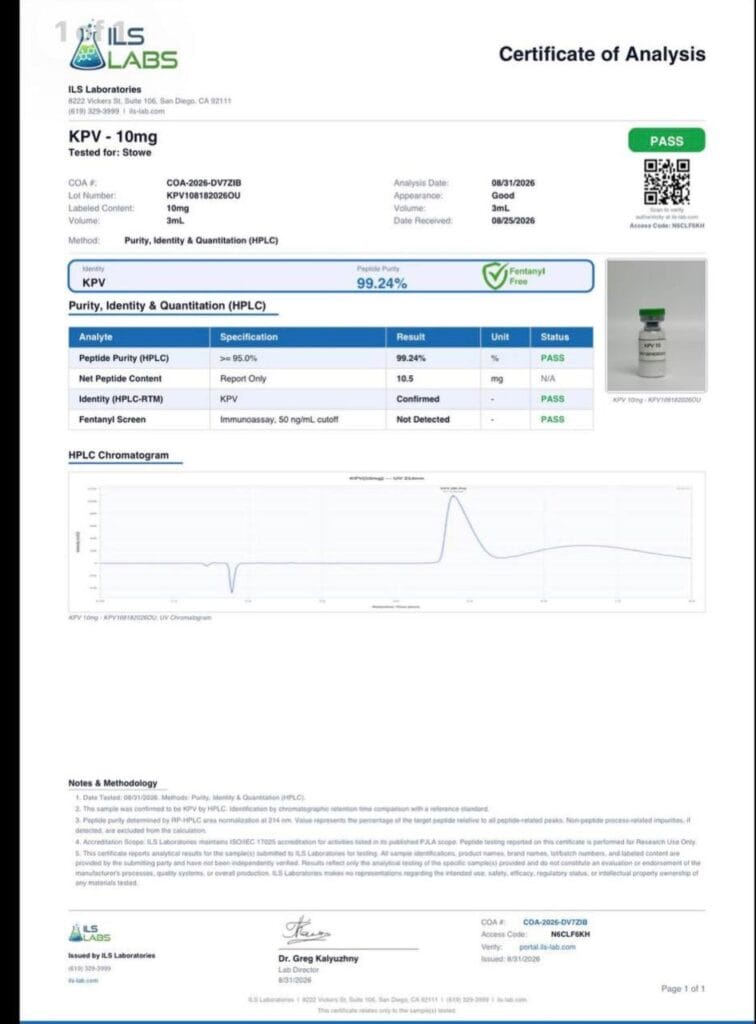
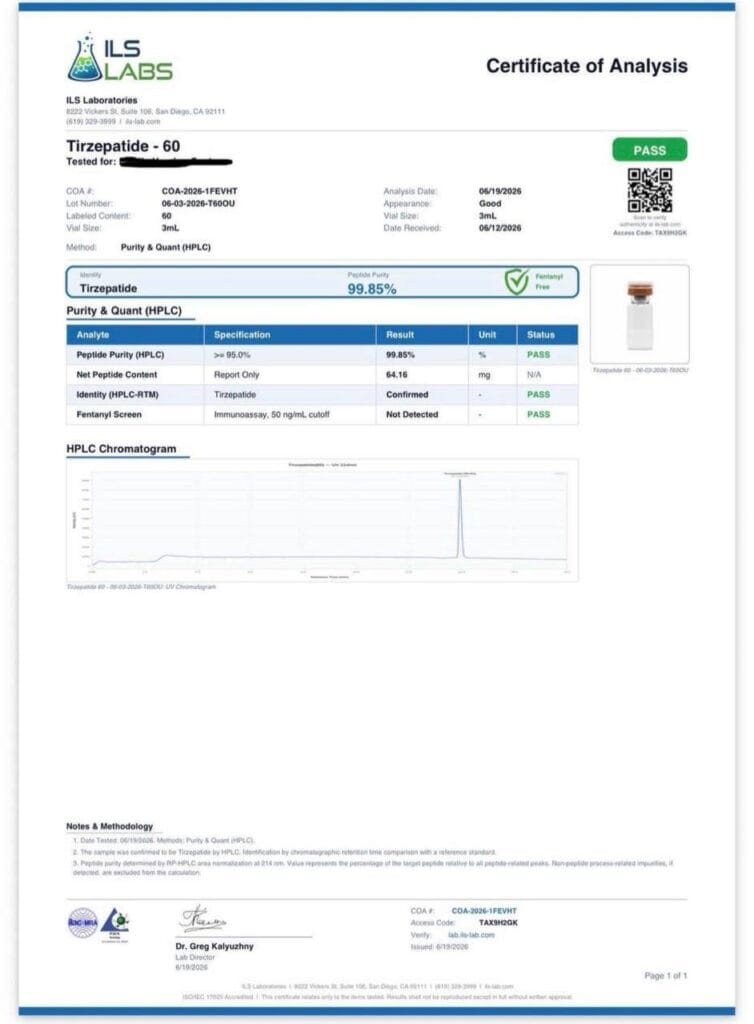
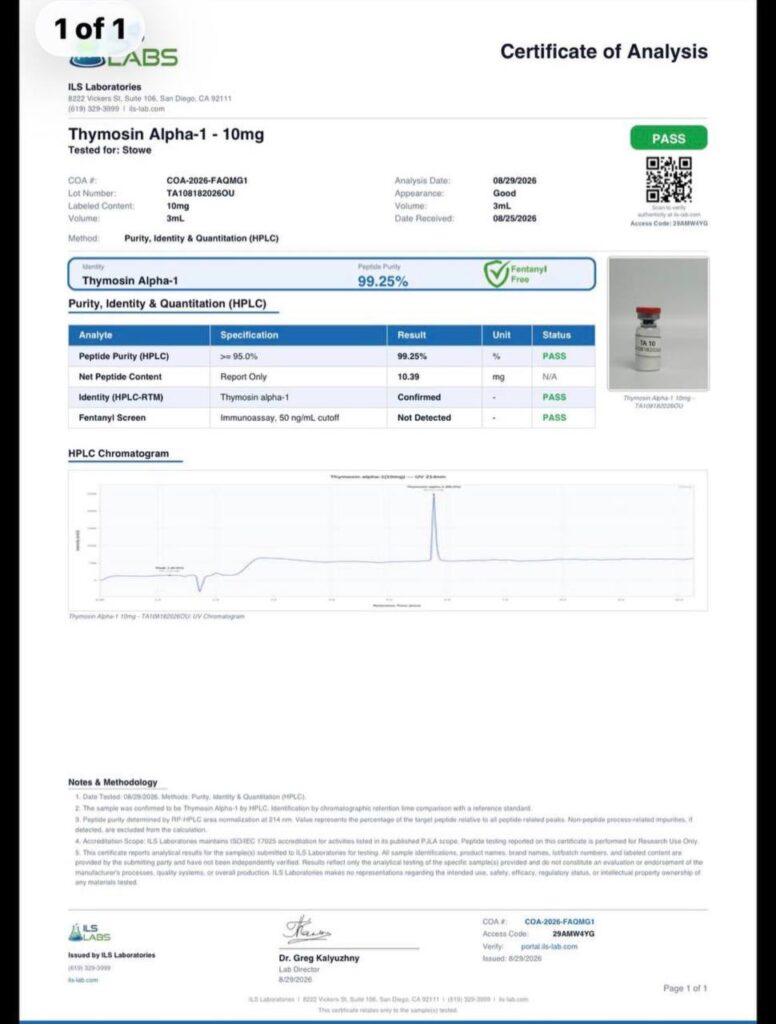
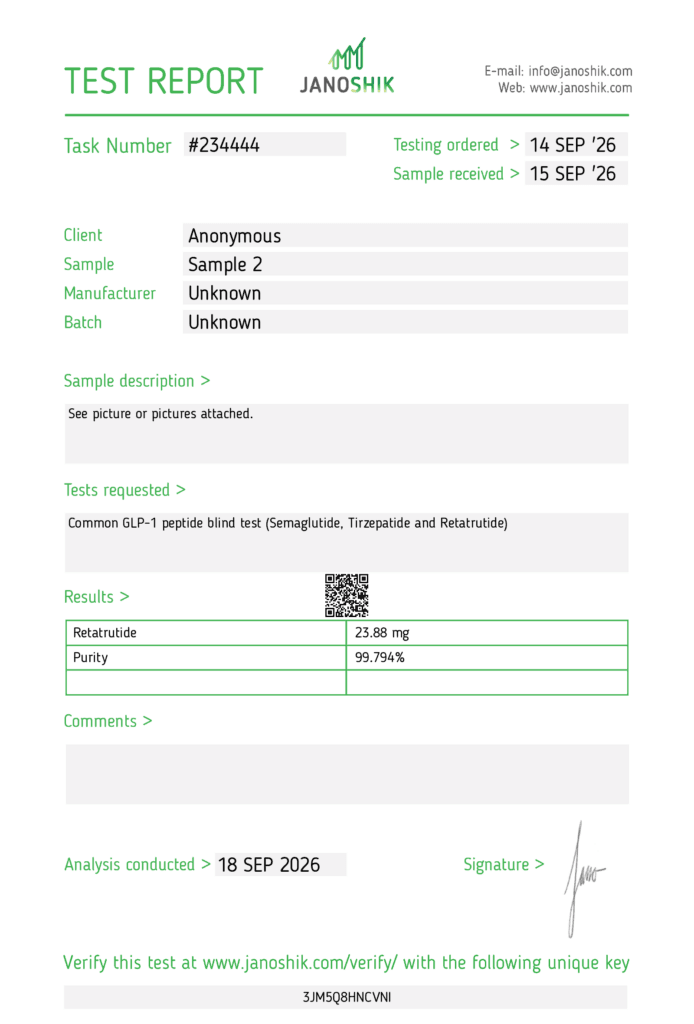
This page collects the third-party certificates of analysis we hold, each one reproduced exactly as the laboratory issued it. Each COA includes third-party laboratory testing results such as peptide identity confirmation, purity levels, and analytical data (HPLC and/or mass spectrometry where applicable).
The collection covers more compounds than are linked from individual product pages, and it grows as new reports come back. Where a certificate appears on a product page, it is the report for the material that page describes.
* also includes customer-conducted results.
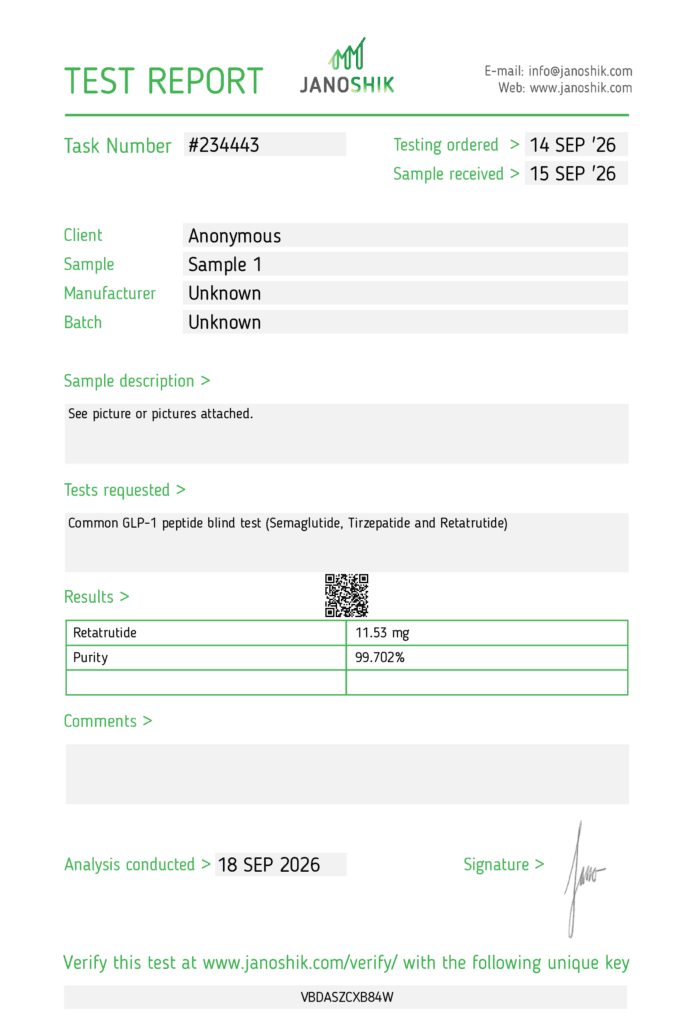
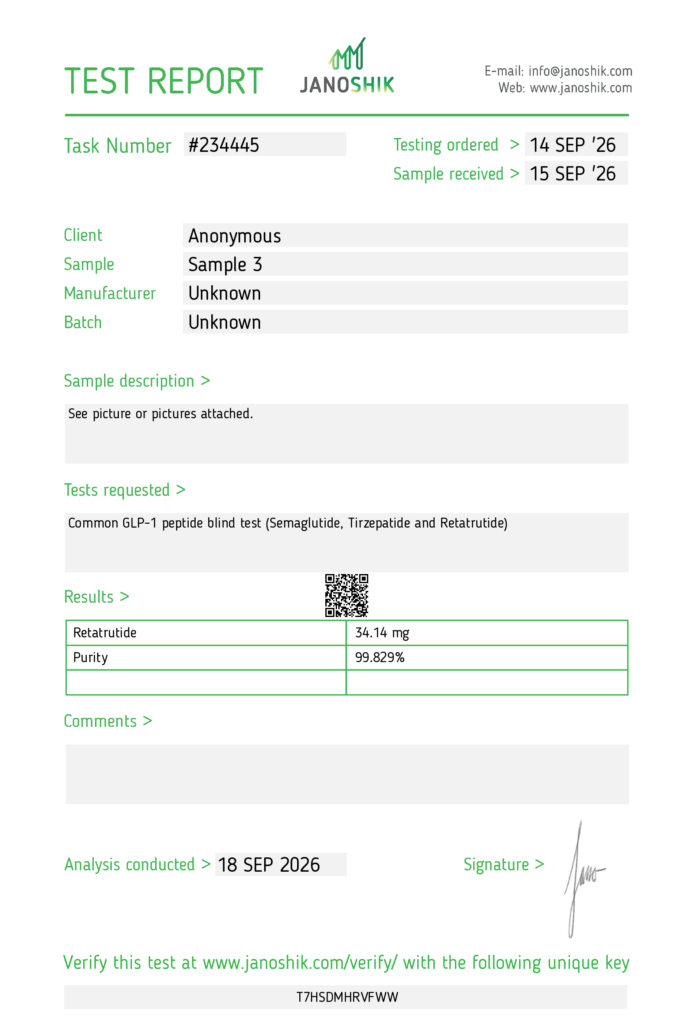
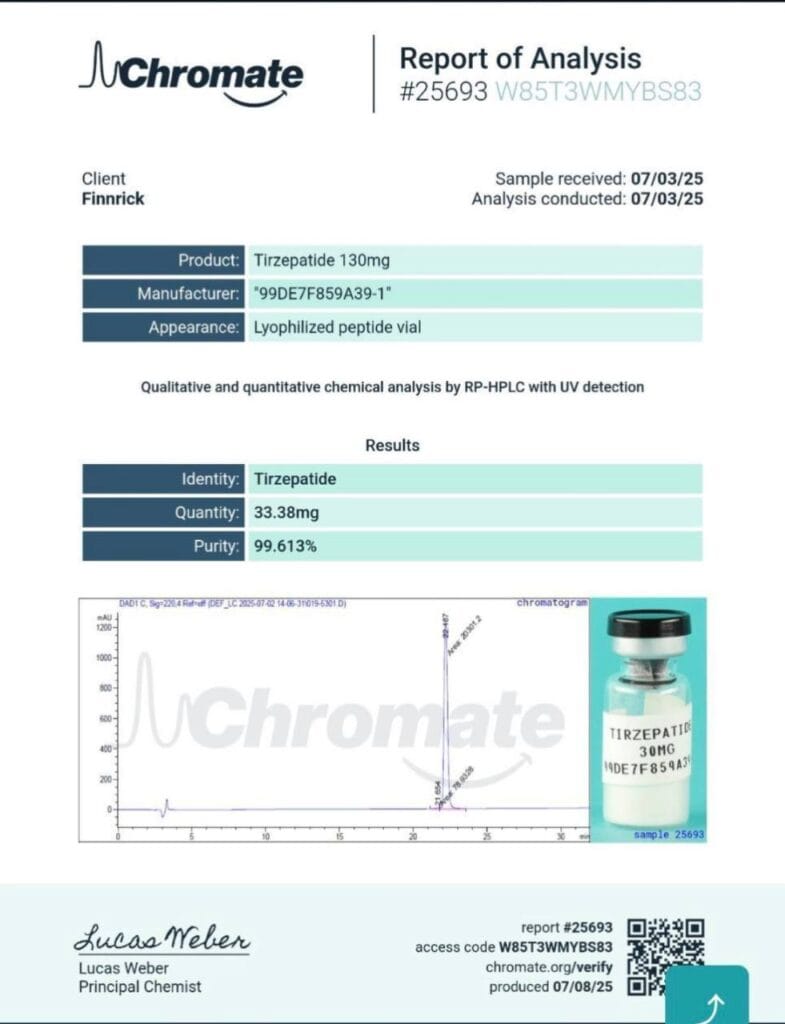
What a certificate of analysis actually establishes
A certificate of analysis is a batch record. It states what a specific production lot was tested for, by which methods, and what the results were. It is not a general statement about a supplier, and it is not a quality claim that transfers from one batch to the next. Reading one properly takes about two minutes and rules out most of what goes wrong when sourcing research peptides in Canada.
Identity comes before purity
Mass spectrometry confirms what the compound is, by comparing the observed mass against the calculated mass for the intended sequence. Until identity is settled, a purity figure only tells you that whatever is in the vial is uniform. Both questions need answering, and they are answered by different methods.
Purity is a method-dependent number
RP-HPLC purity is an area-percent measurement, and it moves with the conditions. A steeper gradient compresses the run and can bury closely eluting deletion sequences under the main peak; a shallower one resolves them and reports a lower figure for the same material. Detection at 214 nm sees the peptide bond and picks up almost everything; 280 nm sees only aromatic residues. This is why a purity percentage without the gradient, column and wavelength beside it is not reproducible, and why two laboratories can report different numbers for the same vial without either being wrong.
What is not on a standard certificate
Identity and purity testing does not establish sterility, endotoxin content or residual solvent levels. Those require separate tests, and a certificate that does not report them has not performed them. If your work has an immune or inflammatory readout, this distinction matters and is worth confirming before ordering.
How our certificates work
- The certificates we hold are published on this site rather than sent only on request or slipped into the box, and where a lot is not shown you can ask for it by email. Anyone can read them before ordering, including people who never order.
- Vials are matched to their certificate by cap and crimp colour, checked against the photographs on the certificate itself. Our vials do not carry printed batch numbers, so the colour combination is the matching mechanism.
- Third-party and in-house testing are distinguished. Each certificate states which methods were applied to that batch and by whom.
- They are falsifiable. If you have a compound independently analysed and it fails the specification stated on its certificate, we refund it in full including what the test cost you. A published certificate is only worth something if there is a consequence for publishing an optimistic one.
Verifying a certificate yourself
- Read the chromatogram, not only the headline number. One sharp main peak on a flat baseline supports the stated figure; a cluster of unresolved shoulders under a single integration does not. Walkthrough: reading an HPLC chromatogram.
- Check the calculated mass yourself against the sequence, including any acyl group, bridge or modification. Arithmetic errors in modified analogs are more common than they should be.
- Look for net peptide content. Lyophilised material carries counterions and residual water, so gross vial mass overstates peptide mass — commonly by fifteen to twenty-five percent. Without this figure you cannot calculate a concentration accurately. See net peptide content explained.
- Check the counterion. Residual trifluoroacetate from purification is itself active in some cell assays. See counterions and salt form.
- Note the date and the batch. A certificate describes the lot it was run on, not the product line.
The longer treatments are in how to read a peptide certificate of analysis, why certificates disagree on purity, HPLC and mass spectrometry verification and third-party versus in-house testing.
Comparing lab-tested suppliers in Canada
If you are weighing one Canadian supplier against another, six questions separate them quickly:
- Are certificates published openly, or only sent on request?
- Can a vial in your hand be matched to a specific certificate?
- Are the analytical conditions — gradient, column, wavelength — stated?
- Is third-party testing distinguished from in-house testing?
- Is there a stated consequence if independent analysis disagrees with the certificate?
- Is the price comparable on a per-milligram net-peptide basis rather than per vial?
The last one catches more than people expect. A cheaper vial with lower net peptide content is not cheaper. See comparing prices per milligram and choosing a research peptide supplier in Canada.
What we do not claim
- No Drug Identification Number and no Natural Product Number. Nothing supplied here is a drug, natural health product, cosmetic or medical device.
- Not manufactured to GMP, and we do not represent that it is.
- No assurance of sterility or endotoxin limits unless a specific batch certificate states those tests were run.
- No dosing, administration or protocol guidance in any channel, on request or otherwise.
- Supplied for laboratory research use only — not for human consumption, clinical, veterinary, cosmetic or household use.
The regulatory framing is set out in regulatory status of research peptides in Canada, and the guarantee in full at purity guarantee and independent testing.
Third-party tested, matched to your vial by cap and crimp colour
- 01Independent testing
Compounds are sent to independent laboratories for HPLC and purity testing. The certificate states the method, the result and the lab that ran it.
- 02Where certificates live
Many product pages show their certificate directly, and the full collection is published here on the certificates of analysis page.
- 03Match the vial
Vials are not batch-printed. Compare the cap and crimp colour of the vial in your hand with the photograph on the certificate.
- 04Test it yourself
If your own third-party test shows a purity failure, the Purity Guarantee refunds the product and reimburses the test.
Need a certificate that is not listed?
Email support@exolabz.ca with the compound and the cap and crimp colour of your vial, and the team will send the matching certificate.
 BPC-157 10mg
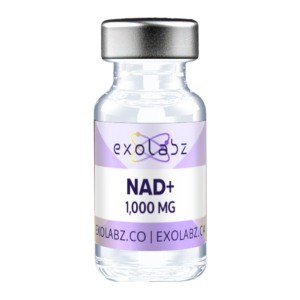 NAD+ 1000mg
 MOTS-c 10mg
 Selank 10mg