Incretin Receptor Pharmacology: GLP-1, GIP and Glucagon Receptors
GLP-1, GIP and glucagon receptors are class B1 G-protein-coupled receptors. They share architecture, they share a primary signalling route, and they are the targets behind mono-, dual- and triple-agonist research compounds. Understanding what distinguishes them clarifies why multi-receptor peptides are designed the way they are.
Class B1 GPCRs
Class B1 receptors have a large extracellular domain that captures the C-terminal portion of a peptide ligand, while the ligand’s N-terminus inserts into the transmembrane bundle and triggers activation. This two-step mechanism explains why these receptors bind peptides rather than small molecules, and why truncating a peptide’s N-terminus usually abolishes activity while leaving binding partly intact.
All three couple primarily to Gαs. Activation raises intracellular cAMP and activates protein kinase A. Cryo-EM structures of agonist-bound receptor–Gs complexes have resolved the binding poses directly; Zhao and colleagues published five such structures across GIPR, GLP-1R and GCGR at 3.0–3.5 Å resolution (Nat Commun, 2022; PMID 35217653).
The three receptors
GLP-1 receptor
Expressed in pancreatic beta cells, the central nervous system and elsewhere. Native GLP-1 is rapidly cleaved by dipeptidyl peptidase-4 at the position-2 alanine, giving a plasma half-life of minutes. Essentially every synthetic analog addresses this — substitution at position 2, fatty-acid acylation for albumin binding, or backbone modification.
GIP receptor
The other incretin receptor, expressed in beta cells and adipose tissue. GIP is also a DPP-4 substrate. GIPR pharmacology is less straightforward than GLP-1R: both agonism and antagonism have been reported to produce overlapping metabolic phenotypes in preclinical models, and the field has not fully resolved why.
Glucagon receptor
Predominantly hepatic. Glucagon opposes insulin in glucose homeostasis, and GCGR activation also increases energy expenditure in rodent models — the rationale for including glucagon agonism in a multi-receptor peptide despite its glycaemic effect running counter to the incretin arms.
Why sequences overlap
GLP-1, GIP and glucagon all derive from the same ancestral peptide family and share substantial sequence homology, particularly at the N-terminus. That homology is what makes multi-receptor agonism achievable: a single engineered sequence can retain enough of each native ligand’s recognition elements to activate more than one receptor.
Balance and bias
A dual or triple agonist is characterised not just by which receptors it activates but by relative potency at each, and by which downstream pathways it favours. Willard and colleagues characterised tirzepatide as an imbalanced and biased dual agonist, measuring competition radioligand binding, cAMP accumulation, GTPγS binding, β-arrestin-1/2 recruitment and receptor internalisation at human GIPR and GLP-1R in HEK293 and CHO-K1 cells at defined low receptor densities (JCI Insight, 2020; PMID 32730231).
Two concepts matter here:
- Imbalance — unequal potency across the targeted receptors. A compound can be near-native at one receptor and substantially weaker at another by design.
- Bias — preferential engagement of one downstream pathway over another at the same receptor, most often cAMP signalling versus β-arrestin recruitment. Reduced β-arrestin recruitment means less receptor internalisation and desensitisation, which changes the response profile under sustained exposure.
Because both properties are tunable, triple agonists are engineered against explicit potency ratios rather than maximised at every receptor. Knerr and colleagues built unimolecular triagonists with empirically tuned in vitro GLP-1R/GIPR/GCGR ratios and measured the resulting phenotypes in diet-induced obese mice (Mol Metab, 2022; PMID 35809773).
What this means for assay design
Characterising a multi-receptor compound requires each receptor tested separately in a defined expression system, at controlled receptor density — potency measurements shift substantially with overexpression — and across more than one downstream readout. A cAMP EC50 alone will not reveal bias.
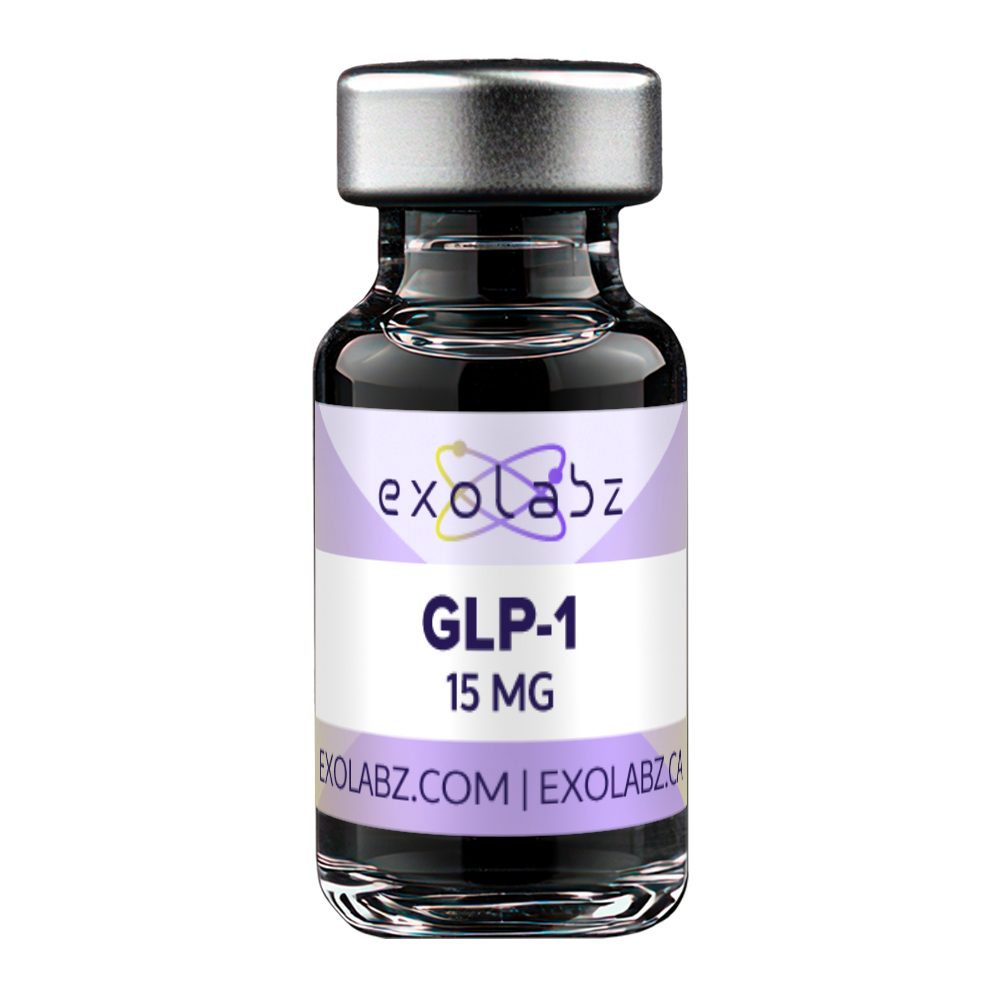
ExoLabz supplies GLP-1, GLP-1/GIP and GLP-1/GIP/Glucagon research peptides. Browse Incretin & Metabolic Peptides.
This article covers receptor pharmacology and preclinical literature only. All products referenced are supplied for laboratory research use only and are not approved for human consumption, clinical, or veterinary use.