
Mitochondrial & Cellular Compounds
Mitochondria-targeted and mitochondrial-derived research compounds, supplied as lyophilised powder for laboratory research use only. Three distinct kinds of molecule sit in this category and they are not variations on one theme.
Mitochondrial-derived peptides
MOTS-c is encoded in the mitochondrial genome rather than the nuclear genome — a 16-residue peptide, MRWQEMGYIFYPRKLR, C101H152N28O22S2, about 2,174.6 g/mol, CAS 1627580-64-6. Its mitochondrial origin is the interesting feature: it belongs to a small class of peptides transcribed from mitochondrial DNA, which is a comparatively recent area of the literature.
Note the sequence: two methionines and a tryptophan. That is three oxidation-capable residues in sixteen, so a mass 16 above target is the impurity to expect, and storage discipline matters more here than for a sequence without them.
Mitochondria-targeted synthetic peptides
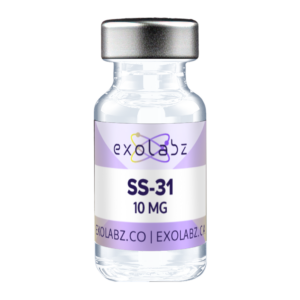
SS-31 (elamipretide) is a synthetic tetrapeptide — D-Arg-Dmt-Lys-Phe-NH2, C32H49N9O5, about 639.8 g/mol, CAS 736992-21-5. It is not mitochondrially derived; it is designed to accumulate at the inner mitochondrial membrane, where the proposed interaction is with cardiolipin. Its alternating aromatic-cationic pattern is what drives that localisation.
Two of its four residues are non-standard — a D-arginine and a dimethyltyrosine — which means amino-acid analysis after hydrolysis cannot confirm the sequence, because that method cannot distinguish D from L. Identity rests on mass and on the synthesis route. See SS-31 and cardiolipin and what MOTS-c and SS-31 research actually measures.
NAD+, which is not a peptide at all
NAD+ is a dinucleotide coenzyme — C21H27N7O14P2, 663.4 g/mol, CAS 53-84-9 — and it is in this category by function rather than by chemistry. Because it is not a peptide, peptide-specific analysis does not apply to it: there is no sequence to confirm, net peptide content is not a meaningful figure, and the relevant purity question is chromatographic separation from its reduced form and its hydrolysis products. It is also supplied in much larger vial masses, 500 mg and 1,000 mg, than anything else on this site. See NAD+ as a coenzyme.
Analysis and handling
Certificates of analysis are published per product with batch photographs for matching. Given the oxidation routes available to two of the three compounds here, read how peptides degrade alongside how HPLC and mass spectrometry verify purity.
Supplied for laboratory research use only. Not authorised by Health Canada or the FDA; no DIN or NPN; not manufactured to pharmaceutical GMP standards; not for human or veterinary use.
Showing all 6 results
-
 View product
Mitochondrial & Cellular Compounds
View product
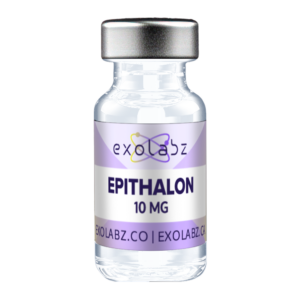
Mitochondrial & Cellular CompoundsEpitalon 10mg
Price range: $41.25 through $55.00 -
 View product
Mitochondrial & Cellular Compounds
View product
Mitochondrial & Cellular CompoundsMOTS-c 10mg
Price range: $50.99 through $67.99 -
 View product
Mitochondrial & Cellular Compounds
View product
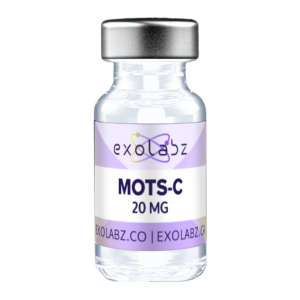
Mitochondrial & Cellular CompoundsMOTS-c 20mg
Price range: $82.49 through $109.99 -
 View product
Mitochondrial & Cellular Compounds
View product
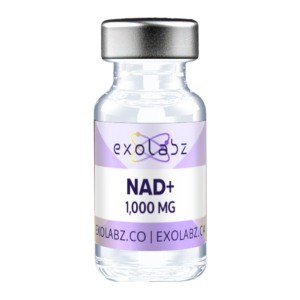
Mitochondrial & Cellular CompoundsNAD+ 1000mg
Price range: $149.99 through $199.99 -
 View product
Mitochondrial & Cellular Compounds
View product
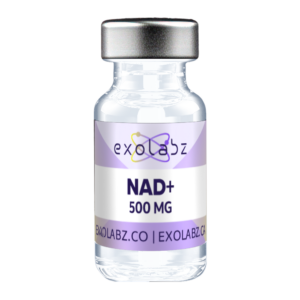
Mitochondrial & Cellular CompoundsNAD+ 500mg
Price range: $82.49 through $109.99 -
 View product
Mitochondrial & Cellular Compounds
View product
Mitochondrial & Cellular CompoundsSS-31 Peptide 10mg
Price range: $56.24 through $74.99
Mitochondrial & Cellular Compounds compared
| Compound | Vial | Price 1 vial | Per mg | Relative cost per mg | Per mg at 10+ | Status |
|---|---|---|---|---|---|---|
 Epitalon 10mgMitochondrial & Cellular Compounds Epitalon 10mgMitochondrial & Cellular Compounds | 10 mg | $55.00 | $5.50 | $4.13 | In stock | |
 MOTS-c 10mgMitochondrial & Cellular Compounds MOTS-c 10mgMitochondrial & Cellular Compounds | 10 mg | $67.99 | $6.80 | $5.10 | In stock | |
 MOTS-c 20mgMitochondrial & Cellular Compounds MOTS-c 20mgMitochondrial & Cellular Compounds | 20 mg | $109.99 | $5.50 | $4.12 | In stock | |
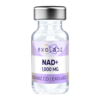 NAD+ 1000mgMitochondrial & Cellular Compounds NAD+ 1000mgMitochondrial & Cellular Compounds | 1,000 mg | $199.99 | $0.20 | $0.15 | In stock | |
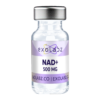 NAD+ 500mgMitochondrial & Cellular Compounds NAD+ 500mgMitochondrial & Cellular Compounds | 500 mg | $109.99 | $0.22 | $0.16 | In stock | |
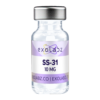 SS-31 Peptide 10mgMitochondrial & Cellular Compounds SS-31 Peptide 10mgMitochondrial & Cellular Compounds | 10 mg | $74.99 | $7.50 | $5.62 | In stock |
Prices in CAD for the quantity selected above. Bulk pricing applies automatically in the cart: 5% off 2 to 5 vials, 10% off 6 to 7, 15% off 8 to 9 and 25% off 10 or more, the same tiers shown on every product page. All products are for laboratory research use only.
Built for Canadian labs that check the data
Packed and handed to the carrier usually within one business day, then tracked across Canada, typically 1 to 4 business days outside the territories.
Independent laboratories run the HPLC and purity work. Certificates live on the certificates page and on selected product pages, and cap and crimp colour ties a vial to its document.
Test a vial yourself. If an independent laboratory reports a purity failure, the product is refunded and the cost of that test comes back with it.
Free over $200 CAD, with no clearance, duty or brokerage anywhere in the country, and quantity pricing applied in the cart.
Email and live chat reach someone who knows the catalogue, with replies in about an hour, day or night.
Encrypted payment in Canadian dollars, plain protective packaging, and parcels released only to the named purchaser.
From cart to bench in four steps
- 01Choose your compounds
Check identity data and certificates before you order.
- 02Secure checkout
Encrypted payment, with quantity discounts applied in the cart.
- 03Packed and dispatched
Usually within 1 business day, with tracking emailed as it leaves.
- 04Delivered
A domestic parcel, 1 to 4 business days across the provinces.
5.0 out of 5 from 25 reviews
Arrived quickly. Packaging was clearly legible
Have tried other suppliers. Exolabz is hands down the best at communication and ease of ordering and tracking my order
Yes everything was great. I appreciated the little plastic bottle holders also
Research-grade compounds, shipped from inside Canada.
Free tracked shipping over $200, dispatch usually within 1 business day, and third-party HPLC and purity testing.
 BPC-157 10mg
 Selank 10mg