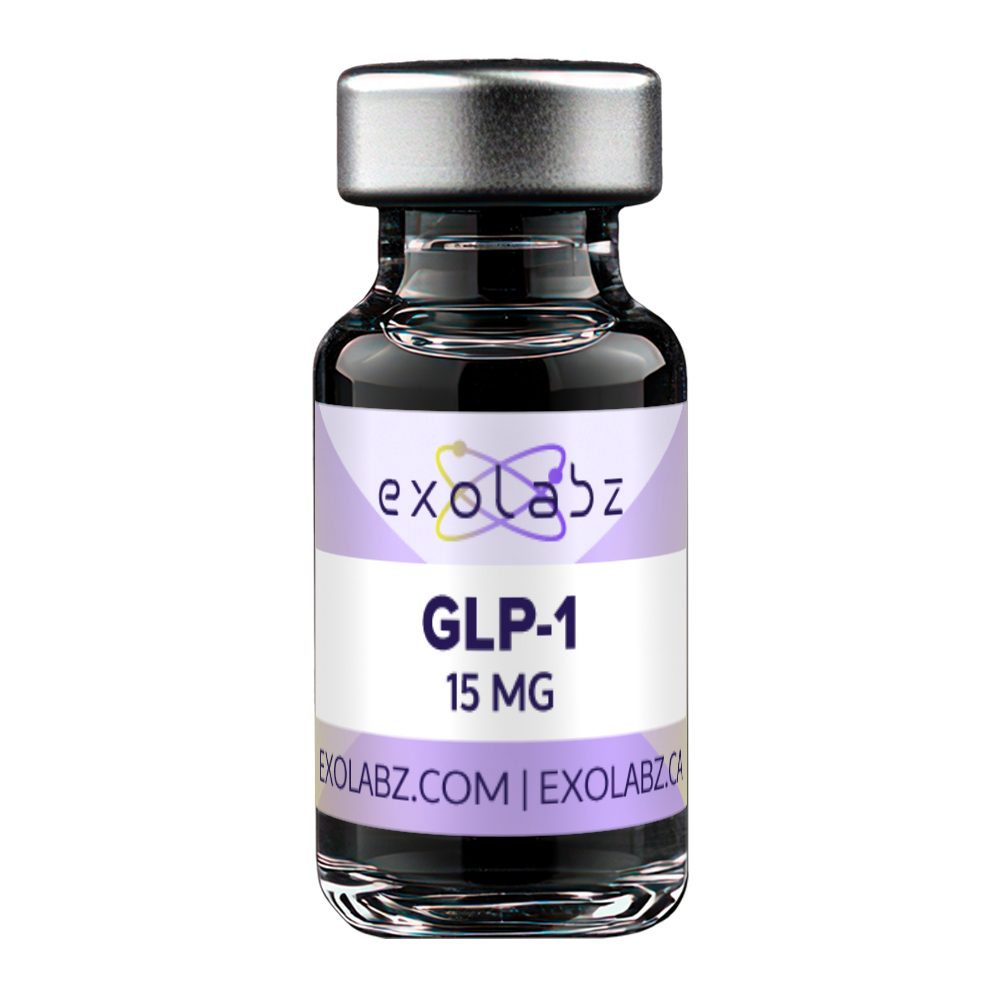
From the Bannatyne campus in downtown Winnipeg to a teaching lab in Brandon, Manitoba buyers get the ExoLabz catalogue on a domestic tracked service, with a third-party certificate behind every batch and no customs step between the dispatch point and the prairie.
Who orders in Manitoba
Manitoba’s research activity is concentrated almost entirely in Winnipeg. The University of Manitoba accounts for the largest share, split between the Fort Garry campus and the Bannatyne health sciences campus downtown, with the Rady Faculty of Health Sciences and the Children’s Hospital Research Institute of Manitoba among the heaviest users of compounds of this kind. The University of Winnipeg, the Universite de Saint-Boniface and the Canadian Centre for Agri-Food Research in Health and Medicine make up much of the rest, and there is a federal laboratory presence in the city as well. Brandon University is the main address outside the capital.
These are all central-receiving sites. A carrier marks a parcel delivered at the dock, and the move to a named laboratory happens on the institution’s own schedule, which on a split campus can mean an extra internal leg between Fort Garry and Bannatyne. Put a department, a room and a contact name on the label, and say which campus. If the purchasing desk will not raise an order without a written quotation, ask for one first; it will name the compound, the quantity and the Manitoba address.
Counter-ions, and what the label weight is actually measuring
Independent analysis covers each batch we sell, and the resulting certificates sit openly on this site for any Manitoba purchasing office to check before ordering. The figure most often misread is the milligram number on the vial.
Synthetic peptides are purified by reversed-phase HPLC using trifluoroacetic acid, and they come off that process as trifluoroacetate salts. The TFA is not an impurity in the ordinary sense; it is paired with the basic residues in the sequence, and how much of it there is depends on how many of those residues the peptide has. A sequence rich in arginine and lysine carries proportionally more counter-ion than one with few. Combined with residual water, that is why a vial labelled 5 mg contains 5 mg of powder rather than 5 mg of peptide, and why the gap is not a fixed percentage that can be assumed once and reused across compounds.
Two practical consequences. Concentrations calculated from the label rather than from net peptide content are systematically overstated, and the size of the error varies by sequence, so it does not cancel out when comparing compounds. And where TFA itself interferes with an assay, an acetate salt form is the alternative to ask about rather than something to correct for afterwards. See counter-ions and salt form and net peptide content explained.
Regulatory position, stated plainly
A Manitoba order is for bench work and nothing else. None of these compounds carries a Drug Identification Number or any Canadian authorisation for sale for human use, and none is approved for consumption, clinical practice or veterinary work, whether the buyer is a Fort Garry lab or a private researcher in Steinbach.
That is what defines the offer rather than a caveat printed under it. No dosing information, no protocol involving human or animal subjects and no claim about benefit or outcome appears on this site, and none is available on request. Meeting University of Manitoba biosafety, Shared Health or other institutional rules, and the provincial and federal framework, stays with the purchaser. Our overview of how research peptides are regulated in Canada sets out where that line sits.
What Manitoba laboratories order most
Every category below is available on Winnipeg and rural Manitoba addresses alike:
- Incretin & Glucagon Peptides
- Growth Hormone Secretagogues — GHRH analogues, ghrelin-receptor agonists
- BPC-157 & TB-500 Peptides
- Mitochondrial & Cellular Compounds
- Neuropeptides
- Melanocortin Peptides
- Copper Peptides
- Multi-Peptide Blends
Winnipeg sits at the centre of the country, and it shows
Winnipeg lies on the main east–west corridor near the geographic centre of Canada, so parcels reach it on primary lanes and transit compares well with most destinations beyond Toronto and Montreal. Rural Manitoba addresses add a day on top and are more often left unattended. We also ship to Brandon, Steinbach, Thompson, Portage la Prairie and the rest of the province.
Two opposite seasons on one set of prairie roads
Southern Manitoba swings from deep continental cold in January to real heat in July, with no ocean nearby to soften either end. A Manitoba delivery therefore needs two opposite pieces of seasonal advice rather than one.
In winter a parcel arrives cold, which dry powder handles well. What goes wrong is condensation, when a chilled vial is opened straight into a heated room; leaving it sealed until it reaches room temperature prevents that.
In summer a van parked in the sun can hold a parcel well above outdoor temperature for hours. A single warm day in a van will not ruin dry powder, yet warmth speeds up every route by which a peptide degrades, and a lab that reorders every few weeks through a Manitoba summer adds those exposures together. If a July order can be signed for rather than left at the door, arrange that, and move it into a 2–8 °C fridge the same day.
Both cases are covered by how peptides degrade and storage and stability.
GST only on a Manitoba invoice
An order delivered anywhere in Manitoba attracts 5% GST and nothing further. Manitoba RST is not charged on top of it.
Because RST shows up on so many Manitoba receipts, buyers often expect it here, but it does not appear on an ExoLabz invoice. Checkout works the figure out from the shipping address and prints it once; a Manitoba institution registered for GST claims it back as an input tax credit.
Because the parcel never leaves Canada, a Winnipeg or Brandon receiver sees no duty bill and no broker’s invoice at the door.
Cities in Manitoba with their own page
Only one Manitoba city has a dedicated page so far: research peptides in Winnipeg covers transit into the city, receiving at the University of Manitoba and the federal laboratories, and what a winter blizzard on the Trans-Canada does to a delivery date. Orders to Brandon, Thompson and the rest of the province follow this page.
Compounds we ship to Manitoba
- SS-31 10mg $74.99
- KLOW 80mg $169.99
- SEMAX 10mg $60.99
- GHK-CU 100mg $104.99
- TESAMORELIN 10mg $119.99 · restocking
- CJC-1295 (NO DAC) & IPAMORELIN BLEND 10mg $79.99
Paperwork a Manitoba purchasing office usually asks for
Most orders from the province pass through a university or health-authority purchasing desk before they reach us, and those desks tend to want the same three things on file: identity data for the compound, a batch certificate, and a written statement of research-use status. Each product listing gives the first of these — sequence, molecular formula and CAS registry number — alongside the third-party certificate for the batch currently in stock.
Certificates are collected on one certificates of analysis page, so a Fort Garry or Bannatyne lab can attach the record to a purchase requisition before the order is placed rather than chasing it after delivery. For anyone less used to reading these documents, what an independent peptide test does and does not measure explains the HPLC and mass-spectrometry figures field by field.
Two habits save time at the Manitoba end. Record which certificate matches which vial the day the parcel is opened, because a split campus makes it easy for material and paperwork to end up in different buildings. And when a study will run through more than one batch, note the batch change in the lab record, since certificates describe a batch rather than a product. None of the catalogue is supplied for anything other than laboratory research.
Common questions about ordering in Manitoba
Which tax rate applies in Manitoba?
An order delivered anywhere in Manitoba attracts 5% GST and nothing further. Manitoba RST is not charged on top of it. Because RST shows up on so many Manitoba receipts, buyers often expect it here, but it does not appear on an ExoLabz invoice.
Who orders research peptides in Manitoba?
Manitoba's research activity is concentrated almost entirely in Winnipeg. The University of Manitoba accounts for the largest share, split between the Fort Garry campus and the Bannatyne health sciences campus downtown, with the Rady Faculty of Health Sciences and the Children's Hospital Research Institute of Manitoba among the heaviest users of compounds of this kind.
Do you ship beyond Manitoba?
Only one Manitoba city has a dedicated page so far: research peptides in Winnipeg covers transit into the city, receiving at the University of Manitoba and the federal laboratories, and what a winter blizzard on the Trans-Canada does to a delivery date.
What should a Manitoba buyer check before ordering?
Independent analysis covers each batch we sell, and the resulting certificates sit openly on this site for any Manitoba purchasing office to check before ordering. The figure most often misread is the milligram number on the vial.
Is any of this intended for administration?
A Manitoba order is for bench work and nothing else. None of these compounds carries a Drug Identification Number or any Canadian authorisation for sale for human use, and none is approved for consumption, clinical practice or veterinary work, whether the buyer is a Fort Garry lab or a private researcher in Steinbach.