
Description
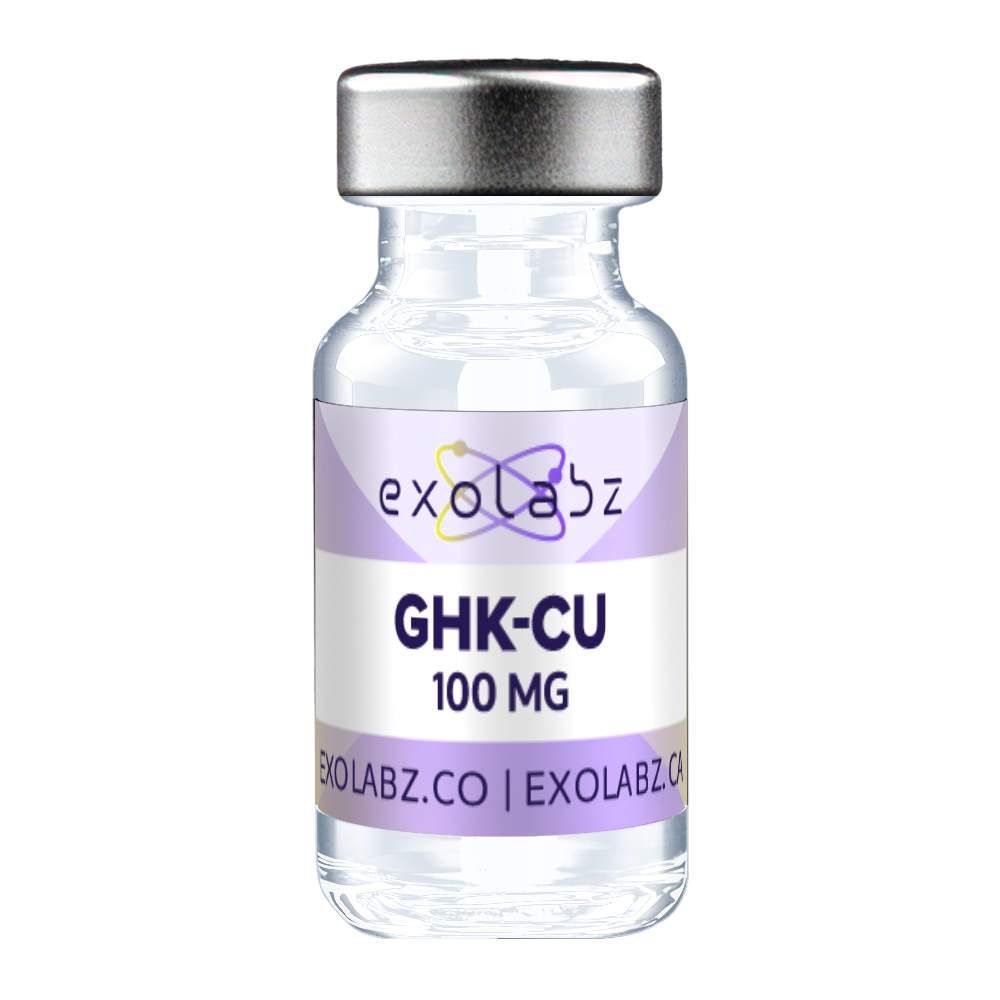
GHK-CU 100mg – Research-Grade Peptide for Peptide Signaling and Tissue Research
Delivery: Laboratory Research-Grade, 100mg Vial Supplied at 99%+ purity.
Other sizes. The same compound is also supplied as a 50mg vial.
GHK-CU 100mg is a synthetic copper-binding peptide intended exclusively for laboratory research applications. It is commonly referenced in studies on peptide signaling, tissue research, and tissue and matrix molecular biology.
This product is strictly for research purposes only and is not approved for human consumption, clinical use, or veterinary applications.
What Is GHK-CU?
GHK-CU (Copper Peptide GHK-Cu) is a naturally occurring tripeptide that binds copper ions. In controlled laboratory studies, GHK-CU is utilized to investigate:
• Peptide–metal interactions and copper signaling
• Cellular and molecular tissue responses in vitro or ex vivo
• Mechanistic studies in tissue and matrix biology
• Peptide-mediated growth factor modulation
All uses are strictly limited to scientific research and non-clinical experimentation.
Research Applications of GHK-CU 100mg
GHK-CU 100mg is suitable for laboratory studies focused on:
• Peptide Signaling and Cellular Pathways – Investigating mechanisms of copper-binding peptides
• Tissue and Cellular Research – Studies on cellular responses and tissue models in vitro
• Molecular Biology & Biochemistry – Exploring peptide interactions, growth factor pathways, and metalloprotein regulation
• Experimental Tissue Model Research – Laboratory investigation of peptide-mediated cellular responses
• Laboratory Peptide Research – Controlled experiments with synthetic copper peptides
All applications are strictly non-clinical and for scientific investigation only.
Product Specifications
• Peptide: GHK-CU
• Sequence: Gly-His-Lys (copper complex)
• Concentration: 100mg per vial
• Grade: Research-Grade
• Storage: Maintain according to standard peptide laboratory protocols
The 100mg format allows flexible experimental design for multi-phase studies or high-volume laboratory protocols.
Purity & Quality Assurance
ExoLabz peptides are manufactured under strict quality control standards. Each GHK-CU 100mg batch undergoes independent third-party testing to verify identity, purity, and content accuracy. Researchers may submit the peptide for verification. If specifications are not met, ExoLabz provides a refund and testing reimbursement to ensure research integrity.
Important Legal Disclaimer
For Research Purposes Only
GHK-CU 100mg is intended strictly for laboratory research and scientific investigation. It is not approved by Health Canada, FDA, or any other regulatory authority. This product is not for human consumption, medical, or veterinary use. By purchasing, you agree to use it exclusively for lawful laboratory research purposes.
Compound identity and specification
Identity data for GHK-Cu, published so the material can be checked against an independent record rather than taken on trust. The formula, mass and registry number below are verified against PubChem and can be looked up directly.
| Compound | GHK-Cu |
|---|---|
| Sequence | Gly-His-Lys, supplied as the copper(II) complex |
| Molecular formula | C14H24N6O4 (free tripeptide); C14H23CuN6O4 as the copper complex |
| Molecular mass | 340.38 free tripeptide; 402.92 as the copper complex g/mol |
| CAS registry number | 49557-75-7 (GHK); 89030-95-5 (copper tripeptide-1) |
| PubChem | CID 73587 |
| Vial content | 100 mg |
| Physical form | Lyophilised powder in a sealed vial |
| Analysis | Third-party HPLC; the result for this product is published on this page |
| Supplied for | Laboratory research use only |
Analytical note — GHK-Cu. This is a metal complex, not a plain peptide, and it behaves accordingly: the copper can dissociate on-column under acidic reverse-phase conditions, so an analysis may report the free tripeptide rather than the complex. Two CAS numbers circulate because one belongs to the peptide and one to the complex; both are given above rather than merged.
Identity references The molecular formula, molecular mass and CAS registry number above are taken from the PubChem record linked in the table, not from a supplier datasheet, so every figure can be checked against an independent source in one click. Sequences are given as reported in the peptide literature, in the one-letter or three-letter convention as appropriate, with any non-standard residue named in full. Where a compound exists in more than one form — a free peptide and a metal complex, a fragment and its parent protein, a modified and an unmodified analog — the form supplied is the one identified here, and the mass on the certificate of analysis is what distinguishes it.
Research Literature
Peer-reviewed studies involving this compound and its class. All findings listed are from in vitro, cell culture or animal models and are provided for scientific reference only. This product is supplied for laboratory research and is not approved for human consumption, clinical, or veterinary use.
- Maquart FX, et al. FEBS Lett. 1988;238(2):343-346. In cultured fibroblasts, measured collagen synthesis rates in response to the GHK-Cu2+ complex. Source · PMID 3169264
- Simeon A, et al. Life Sci. 2000;67(18):2257-2265. In fibroblast culture, measured matrix metalloproteinase-2 expression and activity by zymography after GHK-Cu2+ exposure. Source · PMID 11045606
- Simeon A, et al. J Invest Dermatol. 2000;115(6):962-968. In rat dermal fibroblast culture and a rodent in vivo model, measured glycosaminoglycan levels and decorin and biglycan mRNA. Source · PMID 11121126
The third-party report for this material is published on this page, and every certificate we hold is collected on the certificates of analysis page.
Related Research Compounds
Browse more compounds in Copper Peptides, or view the full research peptide catalogue.
 BPC-157 10mg
 NAD+ 1000mg
 MOTS-c 10mg
 Selank 10mg
Tristan (verified owner) –
Great and authentic product, works well for the intended use.