
Neuropeptides
Neuropeptide research compounds, supplied as lyophilised powder for laboratory research use only. What connects the compounds in this category is that each is derived from, or modelled on, an endogenous signalling peptide — and in most cases the research interest is in what a short modification does to a native sequence.
ACTH and tuftsin derivatives
Semax is the ACTH(4-7) fragment with a Pro-Gly-Pro extension: MEHFPGP, C37H51N9O10S, about 813.9 g/mol, CAS 80714-61-0. Selank is the tuftsin analog TKPRPGP, C33H57N11O9, about 751.9 g/mol, CAS 129954-34-3, carrying the same Pro-Gly-Pro tail.
That shared tripeptide extension is the design point in both: it is a modification to the native fragment intended to change how quickly the peptide is degraded by peptidases. Two different parent sequences, the same structural strategy. See Semax, Selank and endogenous peptide derivatives and what sets a peptide’s half-life.
Semax contains a methionine, so it has an oxidation route: a species 16 above target is the impurity to look for on a report.
DSIP
Delta sleep-inducing peptide is a nine-residue sequence, WAGGDASGE, C35H48N10O15, about 848.8 g/mol, CAS 62568-57-4. It is notable in this category for how thin and how old much of its literature is, and for the fact that no single receptor has been established for it — which is worth knowing before designing work around it. See what the DSIP literature contains.
KISS1-derived peptides
Kisspeptin-10 is the C-terminal decapeptide of the KISS1 gene product, YNWNSFGLRF-NH2, C63H83N17O14, about 1,302.4 g/mol, CAS 374675-21-5, acting at the KISS1R receptor. Unlike DSIP, this one has a well-characterised receptor and a clear signalling pathway, which makes it a considerably more tractable research tool. See Kisspeptin-10 and KISS1R signalling.
Epithalon
Epithalon is a tetrapeptide, AEDG, C14H22N4O9, 390.35 g/mol, CAS 307297-39-8. It is one of the smallest compounds on this site, and its brevity is an analytical fact as well as a chemical one: a four-residue peptide gives a short retention time and a simple mass spectrum, so identity is comparatively easy to establish. See the Epithalon evidence.
Analysis and handling
Certificates of analysis are published per product with batch photographs for matching. Several sequences here carry an aspartate or asparagine adjacent to a glycine, which is the classic deamidation motif — see where peptide impurities come from.
Supplied for laboratory research use only. Not authorised by Health Canada or the FDA; no DIN or NPN; not manufactured to pharmaceutical GMP standards; not for human or veterinary use.
Showing all 5 results
-
 View product
Neuropeptides
View product
NeuropeptidesDSIP Peptide 5mg
Price range: $39.74 through $52.99 -
 View product
Neuropeptides
View product
NeuropeptidesKisspeptin-10 5mg
Price range: $37.49 through $49.99 -
 View product
Neuropeptides
View product
NeuropeptidesSelank 10mg
Price range: $59.99 through $79.99 -
 View product
Neuropeptides
View product
NeuropeptidesSelank 5mg
Price range: $37.49 through $49.99 -
 View product
Neuropeptides
View product
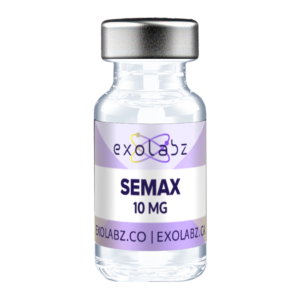
NeuropeptidesSemax 10mg
Price range: $45.74 through $60.99
Neuropeptides compared
| Compound | Vial | Price 1 vial | Per mg | Relative cost per mg | Per mg at 10+ | Status |
|---|---|---|---|---|---|---|
 DSIP Peptide 5mgNeuropeptides DSIP Peptide 5mgNeuropeptides | 5 mg | $52.99 | $10.60 | $7.95 | In stock | |
 Kisspeptin-10 5mgNeuropeptides Kisspeptin-10 5mgNeuropeptides | 5 mg | $49.99 | $10.00 | $7.50 | In stock | |
 Selank 10mgNeuropeptides Selank 10mgNeuropeptides | 10 mg | $79.99 | $8.00 | $6.00 | In stock | |
 Selank 5mgNeuropeptides Selank 5mgNeuropeptides | 5 mg | $49.99 | $10.00 | $7.50 | In stock | |
 Semax 10mgNeuropeptides Semax 10mgNeuropeptides | 10 mg | $60.99 | $6.10 | $4.57 | In stock |
Prices in CAD for the quantity selected above. Bulk pricing applies automatically in the cart: 5% off 2 to 5 vials, 10% off 6 to 7, 15% off 8 to 9 and 25% off 10 or more, the same tiers shown on every product page. All products are for laboratory research use only.
Built for Canadian labs that check the data
Packed and handed to the carrier usually within one business day, then tracked across Canada, typically 1 to 4 business days outside the territories.
Independent laboratories run the HPLC and purity work. Certificates live on the certificates page and on selected product pages, and cap and crimp colour ties a vial to its document.
Test a vial yourself. If an independent laboratory reports a purity failure, the product is refunded and the cost of that test comes back with it.
Free over $200 CAD, with no clearance, duty or brokerage anywhere in the country, and quantity pricing applied in the cart.
Email and live chat reach someone who knows the catalogue, with replies in about an hour, day or night.
Encrypted payment in Canadian dollars, plain protective packaging, and parcels released only to the named purchaser.
From cart to bench in four steps
- 01Choose your compounds
Check identity data and certificates before you order.
- 02Secure checkout
Encrypted payment, with quantity discounts applied in the cart.
- 03Packed and dispatched
Usually within 1 business day, with tracking emailed as it leaves.
- 04Delivered
A domestic parcel, 1 to 4 business days across the provinces.
5.0 out of 5 from 25 reviews
Item arrived on time. Customer service provided updates on shipping time.
Very happy with short wait time to get the product. Simple label to read.
Quick packaging and shipping !
Research-grade compounds, shipped from inside Canada.
Free tracked shipping over $200, dispatch usually within 1 business day, and third-party HPLC and purity testing.
 BPC-157 10mg
 NAD+ 1000mg
 MOTS-c 10mg