
Multi-Peptide Blends
Pre-combined multi-peptide research formulations, supplied in single vials as lyophilised powder for laboratory research use only. A blend is a convenience and a complication in equal measure, and the complication is worth understanding before comparing one against a single-compound vial.
What is actually in each blend
Every blend on this site states its per-component mass, because a blend’s total mass tells you nothing about how much of any one compound you have:
- BPC-157 & TB-500 10 mg — BPC-157 5 mg, TB-500 5 mg
- BPC-157 & TB-500 20 mg — BPC-157 10 mg, TB-500 10 mg
- CJC-1295 (no DAC) & Ipamorelin 10 mg — CJC-1295 without DAC 5 mg, Ipamorelin 5 mg
- GLOW 70 mg — BPC-157 10 mg, TB-500 10 mg, GHK-Cu 50 mg
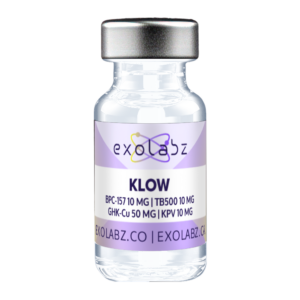
- KLOW 80 mg — BPC-157 10 mg, TB-500 10 mg, GHK-Cu 50 mg, KPV 10 mg
A blend priced against a single-compound vial is a category error unless that split is known. GLOW’s 70 mg looks large next to a 10 mg vial, but 50 of those milligrams are GHK-Cu. See what cost per milligram hides and what is in KLOW and what each component is studied for.
Why a blend is harder to characterise
A single-compound certificate reports one purity figure against one target mass. A blend has to report each component separately, and that raises problems a single vial does not have:
- Co-elution. Components with similar hydrophobicity can overlap on a reverse-phase column, so a chromatogram of a blend is harder to resolve than a chromatogram of either compound alone.
- Ratio verification. Establishing that a vial contains the stated ratio is a quantitative measurement, not the same as establishing that each component is pure.
- Mixed stability. The components do not degrade at the same rate. GHK-Cu carries redox-active copper; BPC-157 does not. The blend’s practical shelf life is set by its least stable component.
- Attribution. If a result looks anomalous, a blend gives you no way to attribute it to one component. For work where that matters, single vials combined at the bench are the better tool.
See reading an HPLC chromatogram and net peptide content — for a blend, net content applies per component.
Analysis and handling
Certificates of analysis are published per product with batch photographs for matching, and identity data is given per component on each listing: sequence, formula, mass, CAS and PubChem link. Store to the requirements of the least stable component — see storage and stability.
Supplied for laboratory research use only. Not authorised by Health Canada or the FDA; no DIN or NPN; not manufactured to pharmaceutical GMP standards; not for human or veterinary use.
Showing all 5 results
-
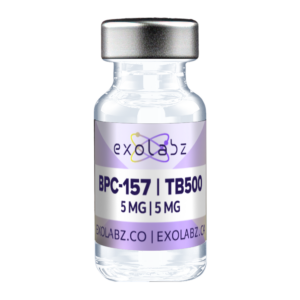 View product
BPC-157 & TB-500 Peptides
View product
BPC-157 & TB-500 PeptidesBPC-157 & TB-500 Blend 10mg
Price range: $63.74 through $84.99 -
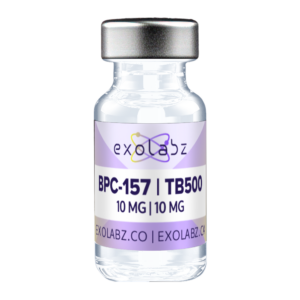 View product
BPC-157 & TB-500 Peptides
View product
BPC-157 & TB-500 PeptidesBPC-157 & TB-500 Blend 20mg
Price range: $119.99 through $159.99 -
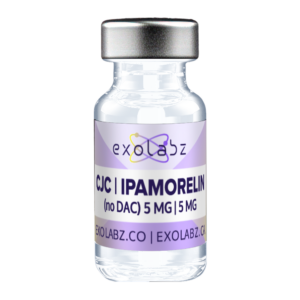 View product
Growth Hormone Secretagogues
View product
Growth Hormone SecretagoguesCJC-1295 & Ipamorelin Blend 10mg
Price range: $59.99 through $79.99 -
Sold Out
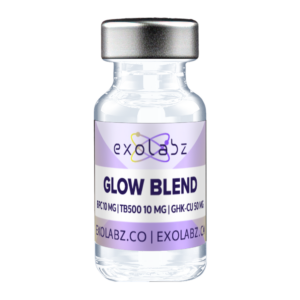 View details
BPC-157 & TB-500 Peptides
View details
BPC-157 & TB-500 PeptidesGLOW Peptide Blend 70mg
Price range: $127.49 through $169.99 -
 View product
BPC-157 & TB-500 Peptides
View product
BPC-157 & TB-500 PeptidesKLOW Peptide Blend 80mg
Price range: $127.49 through $169.99
Multi-Peptide Blends compared
| Compound | Vial | Price 1 vial | Per mg | Relative cost per mg | Per mg at 10+ | Status |
|---|---|---|---|---|---|---|
 BPC-157 & TB-500 Blend 10mgBPC-157 & TB-500 Peptides BPC-157 & TB-500 Blend 10mgBPC-157 & TB-500 Peptides | 10 mg | $84.99 | $8.50 | $6.37 | In stock | |
 BPC-157 & TB-500 Blend 20mgBPC-157 & TB-500 Peptides BPC-157 & TB-500 Blend 20mgBPC-157 & TB-500 Peptides | 20 mg | $159.99 | $8.00 | $6.00 | In stock | |
 CJC-1295 & Ipamorelin Blend 10mgGrowth Hormone Secretagogues CJC-1295 & Ipamorelin Blend 10mgGrowth Hormone Secretagogues | 10 mg | $79.99 | $8.00 | $6.00 | In stock | |
 GLOW Peptide Blend 70mgBPC-157 & TB-500 Peptides GLOW Peptide Blend 70mgBPC-157 & TB-500 Peptides | 70 mg | $169.99 | $2.43 | $1.82 | Restocking | |
 KLOW Peptide Blend 80mgBPC-157 & TB-500 Peptides KLOW Peptide Blend 80mgBPC-157 & TB-500 Peptides | 80 mg | $169.99 | $2.12 | $1.59 | In stock |
Prices in CAD for the quantity selected above. Bulk pricing applies automatically in the cart: 5% off 2 to 5 vials, 10% off 6 to 7, 15% off 8 to 9 and 25% off 10 or more, the same tiers shown on every product page. All products are for laboratory research use only.
Built for Canadian labs that check the data
Packed and handed to the carrier usually within one business day, then tracked across Canada, typically 1 to 4 business days outside the territories.
Independent laboratories run the HPLC and purity work. Certificates live on the certificates page and on selected product pages, and cap and crimp colour ties a vial to its document.
Test a vial yourself. If an independent laboratory reports a purity failure, the product is refunded and the cost of that test comes back with it.
Free over $200 CAD, with no clearance, duty or brokerage anywhere in the country, and quantity pricing applied in the cart.
Email and live chat reach someone who knows the catalogue, with replies in about an hour, day or night.
Encrypted payment in Canadian dollars, plain protective packaging, and parcels released only to the named purchaser.
From cart to bench in four steps
- 01Choose your compounds
Check identity data and certificates before you order.
- 02Secure checkout
Encrypted payment, with quantity discounts applied in the cart.
- 03Packed and dispatched
Usually within 1 business day, with tracking emailed as it leaves.
- 04Delivered
A domestic parcel, 1 to 4 business days across the provinces.
5.0 out of 5 from 25 reviews
It arrived as described. Packaging was professional looking and arrived in great condition
Yes everything was great. I appreciated the little plastic bottle holders also
Great product - I have purchased peptides from various different vendors and this seems to be the only one thats pure . Highly recommend
Research-grade compounds, shipped from inside Canada.
Free tracked shipping over $200, dispatch usually within 1 business day, and third-party HPLC and purity testing.
 BPC-157 10mg
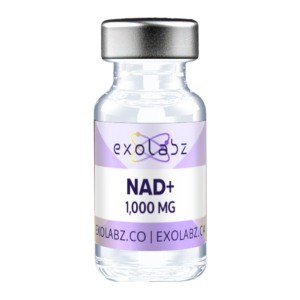 NAD+ 1000mg
 MOTS-c 10mg
 Selank 10mg