
Description
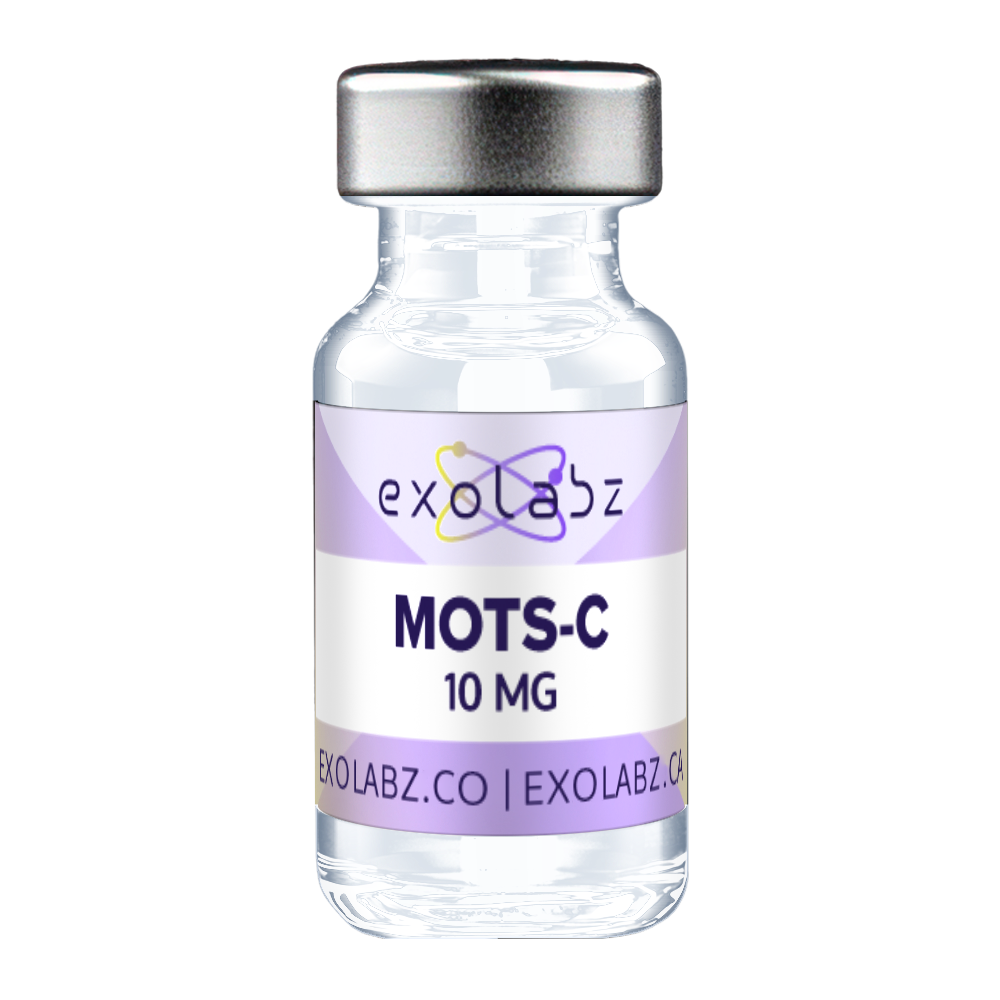
MOTS-c 10mg – Research-Grade Mitochondrial-Derived Peptide
MOTS-c 10mg is a 99%+ purity, research-grade mitochondrial-derived peptide supplied for laboratory and analytical research purposes. MOTS-c (Mitochondrial Open Reading Frame of the 12S rRNA Type-c) is a 16-amino-acid peptide encoded in mitochondrial DNA, referenced in scientific literature for studies of mitochondrial signaling, intracellular communication, and cellular receptor signalling pathways.
This product is strictly intended for laboratory research use and is not approved for human consumption, veterinary use, therapeutic application, or clinical procedures.
What Is MOTS-c?
MOTS-c is a mitochondrial-encoded peptide and part of a class of mitochondrial-derived peptides (MDPs). In laboratory research, MOTS-c is referenced for investigations into:
• Mitochondrial signaling pathways
• AMPK-related cellular pathways
• Glucose and receptor pathway analysis
• Mitonuclear communication and intracellular signaling
All applications are limited to controlled laboratory and analytical studies.
Research Applications of MOTS-c 10mg
MOTS-c 10mg is frequently included in laboratory investigations focused on mitochondrial and receptor signalling pathways, including:
• Mitochondrial Function Studies – Laboratory exploration of mitochondrial structure and signaling
• AMPK Pathway Analysis – Studies of biochemical energy regulation and intracellular signaling
• Receptor signalling Pathway Modeling – Analytical studies of cellular energy-related pathways
• Mitonuclear Communication Research – Controlled investigation of mitochondrial-nuclear signaling
• Laboratory Reference for Biochemical Pathways – Used as a control or comparative peptide in in vitro and ex vivo models
All uses are strictly research-focused and do not indicate or imply effects in humans or animals.
Product Specifications
• Compound: MOTS-c (Mitochondrial Open Reading Frame of 12S rRNA Type-c)
• Quantity: 10mg
• Grade: Research-Grade Peptide
• Intended Use: Laboratory research and analytical testing only
• Storage: Follow standard laboratory peptide storage and handling protocols
The 10mg format provides flexible laboratory supply suitable for multiple experimental protocols and controlled studies.
Purity & Quality Assurance
ExoLabz peptides are manufactured under strict quality control standards to ensure purity, consistency, and reproducibility. ExoLabz products are independently verified for peptide identity and content. Results are published on this site.
Researchers may conduct additional independent testing. If verified testing identifies discrepancies, ExoLabz provides a refund and testing reimbursement, supporting full transparency and research integrity.
Important Research Disclaimer
For Research Purposes Only
MOTS-c 10mg is intended strictly for laboratory research, analytical studies, and educational investigation. It is not for human or veterinary consumption, medical use, or therapeutic application. This product has not been approved by Health Canada, the FDA, or any other regulatory authority.
By purchasing this product, the buyer confirms it will be used exclusively for lawful laboratory research purposes.
Compound identity and specification
Identity data for MOTS-c, published so the material can be checked against an independent record rather than taken on trust. The formula, mass and registry number below are verified against PubChem and can be looked up directly.
| Compound | MOTS-c |
|---|---|
| Sequence | Met-Arg-Trp-Gln-Glu-Met-Gly-Tyr-Ile-Phe-Tyr-Pro-Arg-Lys-Leu-Arg |
| Molecular formula | C101H152N28O22S2 |
| Molecular mass | 2174.6 g/mol |
| CAS registry number | 1627580-64-6 |
| PubChem | CID 146675088 |
| Vial content | 10 mg |
| Physical form | Lyophilised powder in a sealed vial |
| Analysis | Third-party HPLC; the result for this product is published on this page |
| Supplied for | Laboratory research use only |
Analytical note — MOTS-c. Two methionines, which means two oxidation sites: a single sulfoxide adds 16 Da and a double adds 32, and both appear as earlier-eluting peaks. On a 16-residue peptide these are resolvable, so a certificate that does not mention oxidation state has not told you whether they are present.
Identity references The molecular formula, molecular mass and CAS registry number above are taken from the PubChem record linked in the table, not from a supplier datasheet, so every figure can be checked against an independent source in one click. Sequences are given as reported in the peptide literature, in the one-letter or three-letter convention as appropriate, with any non-standard residue named in full. Where a compound exists in more than one form — a free peptide and a metal complex, a fragment and its parent protein, a modified and an unmodified analog — the form supplied is the one identified here, and the mass on the certificate of analysis is what distinguishes it.
Research Literature
Peer-reviewed studies involving this compound and its class. All findings listed are from in vitro, cell culture or animal models and are provided for scientific reference only. This product is supplied for laboratory research and is not approved for human consumption, clinical, or veterinary use.
- Lee C, et al. Cell Metab. 2015;21(3):443-454. In mouse skeletal muscle and cultured cells, measured inhibition of the folate-methionine cycle and de novo purine biosynthesis with consequent AMPK activation. Source · PMID 25738459
- Kim KH, et al. Cell Metab. 2018;28(3):516-524. In cultured human cells under receptor-signalling stress, measured AMPK-dependent nuclear translocation and occupancy at antioxidant-response-element genes. Source · PMID 29983246
- Reynolds JC, et al. Nat Commun. 2021;12:470. In young, middle-aged and old CD-1 and C57BL/6 mice, measured running capacity, grip strength, gait and skeletal-muscle transcriptomic profiles. Source · PMID 33473109
The third-party report for this material is published on this page, and every certificate we hold is collected on the certificates of analysis page.
Related Research Compounds
Browse more compounds in Mitochondrial & Cellular Compounds, or view the full research peptide catalogue.

 NAD+ 1000mg
 MOTS-c 10mg
 Selank 10mg
Leigh (verified owner) –
Arrived on time and very professional looking labels with primo quality products… I’ve ordered from Exolabs a few times now and never had an issue… highly recommend A++.