
Description
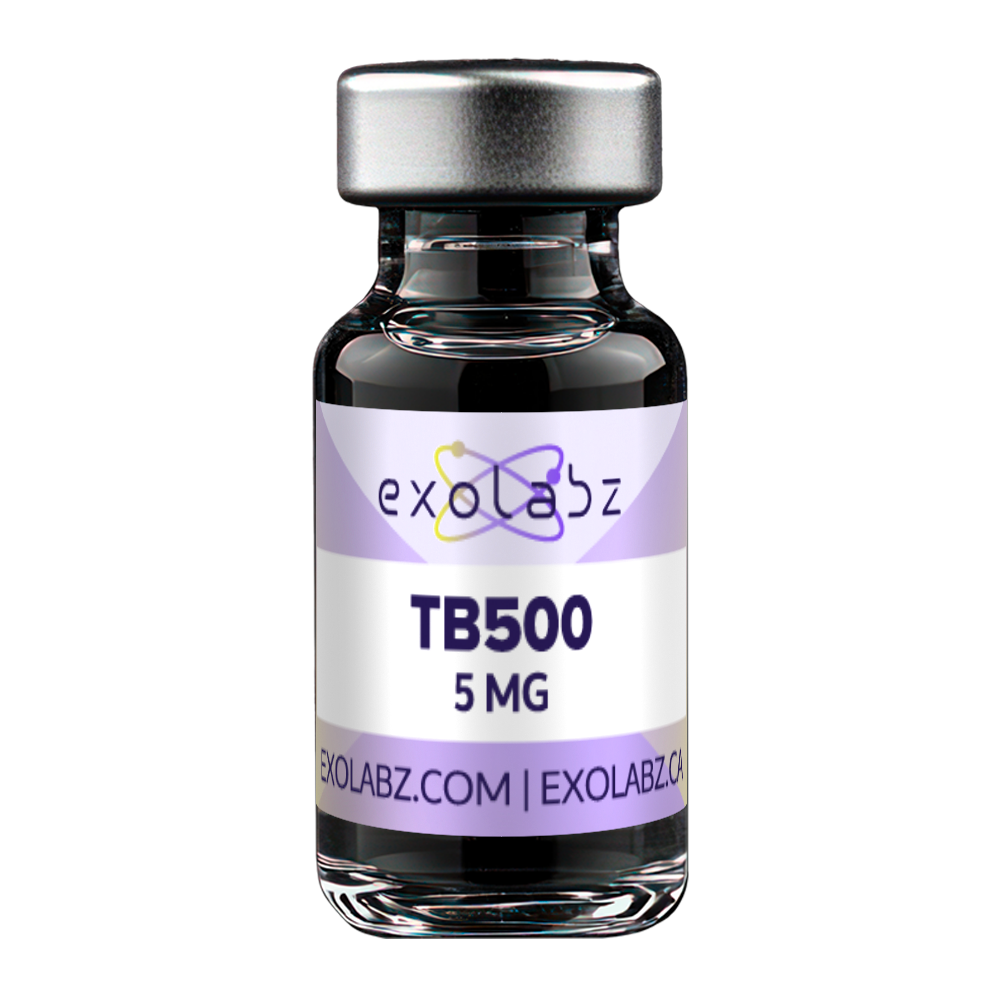
TB500 5mg: Research-Grade Peptide for Laboratory Studies
TB500 5mg, also known as Thymosin Beta-4, is a high-purity, research-grade peptide designed for controlled laboratory studies in cellular and tissue models. This peptide is intended exclusively for scientific research and experimentation and is not approved for human consumption, clinical use, or veterinary applications.
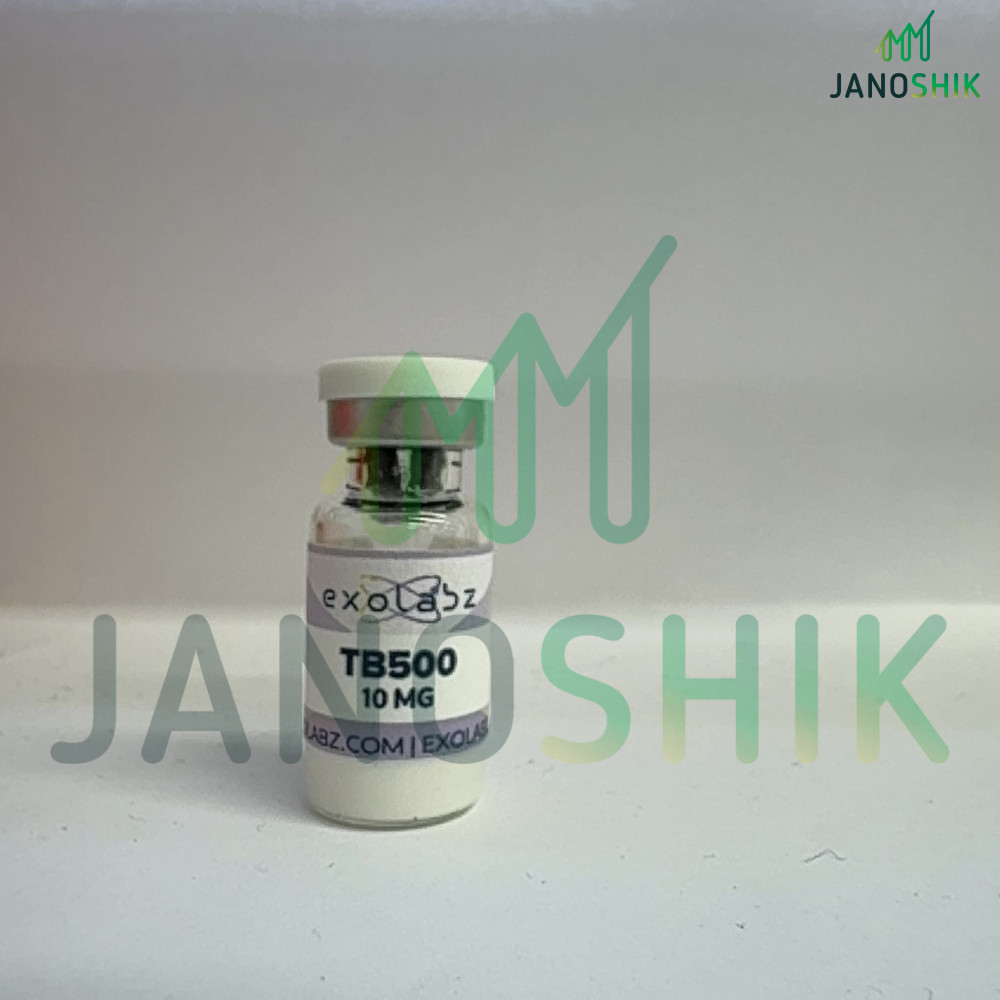
Other sizes. This is the 5mg vial. The same compound is also supplied as a 10mg vial.
What is TB500?
TB500 is a synthetic peptide derived from Thymosin Beta-4, a naturally occurring peptide fragment. It is commonly used in research to investigate:
Cellular pathways and tissue models
Cell migration and extracellular matrix dynamics
Vascular signalling in laboratory tissue models
Muscle, tendon, ligament, and connective tissue experimental models
Multi-phase laboratory protocols for in vitro or ex vivo research
The 5mg vial size provides sufficient quantity for repeated, multi-dose, or short- to medium-term experimental designs.
Key Research Applications of TB500 5mg
Tissue and Muscle Studies – Suitable for experiments involving muscle fibers, tendons, ligaments, and connective tissue models.
Cellular Pathway Exploration – Research focused on peptide-mediated cellular signaling and extracellular matrix interactions.
Vascular Signalling Models – Laboratory investigation of new blood vessel formation in controlled experimental systems.
Repeat-Exposure Experimental Designs – Compatible with short-term, long-term, or repeated experimental applications.
Experimental Tissue Models – Research in controlled in vitro or ex vivo studies involving soft tissue, cartilage, or skeletal muscle.
Why Choose TB500 5mg for Research?
TB500 5mg is manufactured under strict research-grade standards, providing high purity and reproducibility for laboratory experiments.
High-Purity Synthesis – Produced according to validated laboratory protocols.
Consistent Quality Control – Products are tested for identity, purity, and stability.
Optimal Research Quantity – 5mg supports flexible experimental designs and repeated laboratory protocols.
Exclusively for Research – Not intended for human, veterinary, or clinical applications.
Quality Assurance & Purity Testing Guarantee
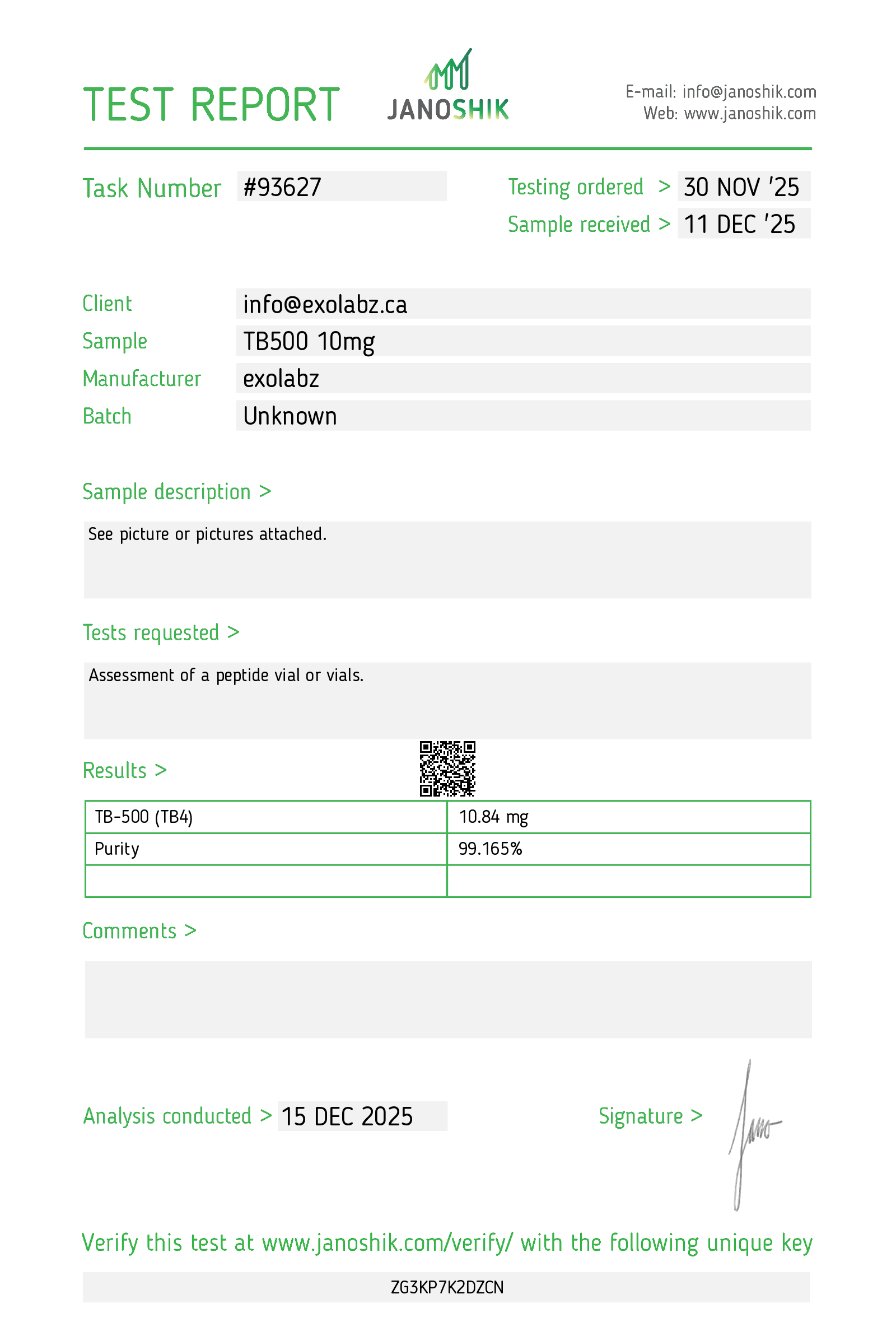
We provide a purity testing guarantee for TB500 5mg. Researchers are encouraged to independently verify the peptide’s purity. If test results indicate any deviation from stated standards, a full refund and reimbursement of testing costs will be provided.
COA: 3P Tested Purity Results: TB500 | 99.165% | 10.84 mg | View Test
Important Legal Disclaimer
For Research Purposes Only
TB500 5mg is strictly for laboratory research and scientific investigation. It is not for human consumption, clinical use, or veterinary application. This product has not been approved by the FDA, Health Canada, or any other regulatory authority for medical, therapeutic, or diagnostic use.
By purchasing, you agree to use TB500 5mg exclusively in controlled laboratory settings in compliance with all applicable laws and regulations.
Compound identity and specification
Identity data for TB-500, published so the material can be checked against an independent record rather than taken on trust. The formula, mass and registry number below are verified against PubChem and can be looked up directly.
| Compound | TB-500 |
|---|---|
| Sequence | Ac-Leu-Lys-Lys-Thr-Glu-Thr-Gln (acetylated LKKTETQ, the thymosin beta-4 17-23 region) |
| Molecular formula | C38H68N10O14 |
| Molecular mass | 889.0 g/mol |
| CAS registry number | 885340-08-9 |
| PubChem | CID 62707662 |
| Vial content | 5 mg |
| Physical form | Lyophilised powder in a sealed vial |
| Analysis | Third-party HPLC; the result for this product is published on this page |
| Supplied for | Laboratory research use only |
Analytical note — TB-500. TB-500 is the short acetylated fragment, not full-length thymosin beta-4, which is a 43-residue protein of about 4,963 g/mol. The two are routinely conflated. A mass near 889 confirms the fragment; a mass near 4,963 would be a different product entirely.
Identity references The molecular formula, molecular mass and CAS registry number above are taken from the PubChem record linked in the table, not from a supplier datasheet, so every figure can be checked against an independent source in one click. Sequences are given as reported in the peptide literature, in the one-letter or three-letter convention as appropriate, with any non-standard residue named in full. Where a compound exists in more than one form — a free peptide and a metal complex, a fragment and its parent protein, a modified and an unmodified analog — the form supplied is the one identified here, and the mass on the certificate of analysis is what distinguishes it.
Research Literature
Peer-reviewed studies involving this compound and its class. All findings listed are from in vitro, cell culture or animal models and are provided for scientific reference only. This product is supplied for laboratory research and is not approved for human consumption, clinical, or veterinary use.
- Bock-Marquette I, et al. Nature. 2004;432(7016):466-472. In embryonic mouse cardiomyocyte and endothelial culture and a mouse coronary artery ligation model, measured cell migration, myocyte survival and ILK/Akt kinase activity. Source · PMID 15565145
- Malinda KM, et al. FASEB J. 1997;11(6):474-481. In human umbilical vein endothelial cell (HUVEC) culture, measured directional chemotactic migration in Boyden-chamber assays. Source · PMID 9194528
- Philp D, et al. FASEB J. 2003;17(14):2103-2105. In HUVEC culture and chick aortic arch explants, measured migration, adhesion and vessel sprouting elicited by the LKKTETQ actin-binding motif at approximately 50 nM. Source · PMID 14500546
Literature notes: Published work concerns full-length thymosin beta-4 or its LKKTETQ actin-binding fragment. Equivalence between those and material marketed as TB-500 is not established in the literature.
The third-party report for this material is published on this page, and every certificate we hold is collected on the certificates of analysis page.
Related Research Compounds
Browse more compounds in BPC-157 & TB-500 Peptides, or view the full research peptide catalogue.


Reviews
There are no reviews yet.