
BPC-157 & TB-500 Peptides
BPC-157 and TB-500 are the two most heavily studied compounds in this market, and they are routinely discussed together despite being unrelated molecules with different origins, different sizes and different proposed mechanisms. This category holds both, in single-compound vials and in pre-combined blends, supplied as lyophilised powder for laboratory research use only.
Two different molecules
BPC-157 is a pentadecapeptide — fifteen residues, GEPPPGKPADDAGLV, C62H98N16O22, about 1,419.5 g/mol, CAS 137525-51-0. It is described in the literature as a fragment derived from a gastric protein sequence. Three consecutive prolines in the middle of the chain give it an analytical signature worth knowing about: proline-rich sequences broaden on reverse-phase HPLC because the bond preceding each proline interconverts slowly between cis and trans conformations relative to the chromatographic run. A broad or shouldered main peak is therefore a property of the molecule rather than evidence of a second substance.
TB-500 is not thymosin beta-4. It is the short acetylated fragment corresponding to the thymosin beta-4 17–23 region — seven residues, C38H68N10O14, about 889 g/mol, CAS 885340-08-9 — whereas full-length thymosin beta-4 is a 43-residue protein of roughly 4,963 g/mol. The two are conflated constantly, including by suppliers, and the mass on the certificate is what separates them. See thymosin beta-4 versus the TB-500 fragment.
What the literature does and does not establish
Both compounds have a substantial in vitro and animal literature and essentially no controlled human data. Neither holds market authorisation in Canada or anywhere else. Our review of what the BPC-157 literature actually shows goes through the study designs, the models used and the limits that follow from them — which is the useful question for anyone designing work around these molecules.
In this category
BPC-157 in 5 mg and 10 mg vials, TB-500 in 5 mg and 10 mg vials, and the combination formulations: a 10 mg blend at 5 mg of each, a 20 mg blend at 10 mg of each, and the larger multi-peptide blends that include both alongside GHK-Cu. Where a blend is supplied, the per-component mass is stated on the listing, because a blend’s total mass tells you nothing about how much of either compound you have.
Analysis and handling
Certificates of analysis are published per product, with batch photographs for matching. Both compounds ship as lyophilised powder because the dry state is far more stable than solution — see storage and stability and where peptide impurities come from.
Supplied for laboratory research use only. Not authorised by Health Canada or the FDA; no DIN or NPN; not manufactured to pharmaceutical GMP standards; not for human or veterinary use.
Showing all 8 results
-
 View product
BPC-157 & TB-500 Peptides
View product
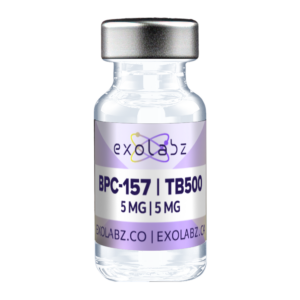
BPC-157 & TB-500 PeptidesBPC-157 & TB-500 Blend 10mg
Price range: $63.74 through $84.99 -
 View product
BPC-157 & TB-500 Peptides
View product
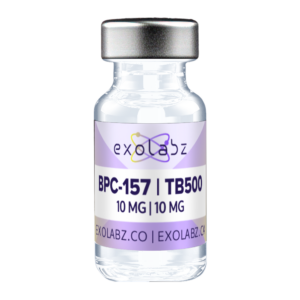
BPC-157 & TB-500 PeptidesBPC-157 & TB-500 Blend 20mg
Price range: $119.99 through $159.99 -
 View product
BPC-157 & TB-500 Peptides
View product
BPC-157 & TB-500 PeptidesBPC-157 10mg
Price range: $68.24 through $90.99 -
 View product
BPC-157 & TB-500 Peptides
View product
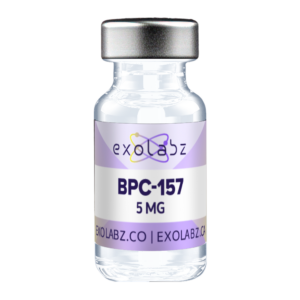
BPC-157 & TB-500 PeptidesBPC-157 5mg
Price range: $42.74 through $56.99 -
Sold Out
 View details
BPC-157 & TB-500 Peptides
View details
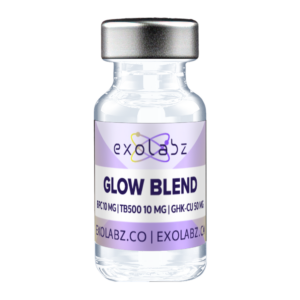
BPC-157 & TB-500 PeptidesGLOW Peptide Blend 70mg
Price range: $127.49 through $169.99 -
 View product
BPC-157 & TB-500 Peptides
View product
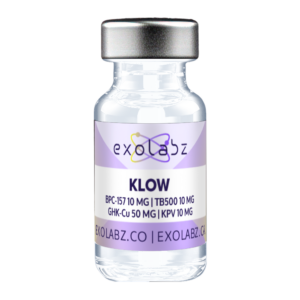
BPC-157 & TB-500 PeptidesKLOW Peptide Blend 80mg
Price range: $127.49 through $169.99 -
 View product
BPC-157 & TB-500 Peptides
View product
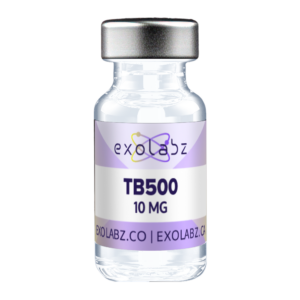
BPC-157 & TB-500 PeptidesTB-500 10mg
Price range: $74.99 through $99.99 -
 View product
BPC-157 & TB-500 Peptides
View product
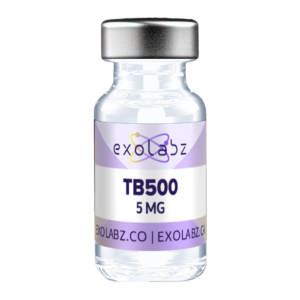
BPC-157 & TB-500 PeptidesTB-500 5mg
Price range: $58.49 through $77.99
BPC-157 & TB-500 Peptides compared
| Compound | Vial | Price 1 vial | Per mg | Relative cost per mg | Per mg at 10+ | Status |
|---|---|---|---|---|---|---|
 BPC-157 & TB-500 Blend 10mgBPC-157 & TB-500 Peptides BPC-157 & TB-500 Blend 10mgBPC-157 & TB-500 Peptides | 10 mg | $84.99 | $8.50 | $6.37 | In stock | |
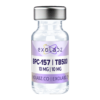 BPC-157 & TB-500 Blend 20mgBPC-157 & TB-500 Peptides BPC-157 & TB-500 Blend 20mgBPC-157 & TB-500 Peptides | 20 mg | $159.99 | $8.00 | $6.00 | In stock | |
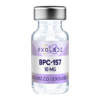 BPC-157 10mgBPC-157 & TB-500 Peptides BPC-157 10mgBPC-157 & TB-500 Peptides | 10 mg | $90.99 | $9.10 | $6.82 | In stock | |
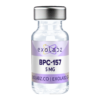 BPC-157 5mgBPC-157 & TB-500 Peptides BPC-157 5mgBPC-157 & TB-500 Peptides | 5 mg | $56.99 | $11.40 | $8.55 | In stock | |
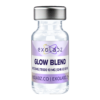 GLOW Peptide Blend 70mgBPC-157 & TB-500 Peptides GLOW Peptide Blend 70mgBPC-157 & TB-500 Peptides | 70 mg | $169.99 | $2.43 | $1.82 | Restocking | |
 KLOW Peptide Blend 80mgBPC-157 & TB-500 Peptides KLOW Peptide Blend 80mgBPC-157 & TB-500 Peptides | 80 mg | $169.99 | $2.12 | $1.59 | In stock | |
 TB-500 10mgBPC-157 & TB-500 Peptides TB-500 10mgBPC-157 & TB-500 Peptides | 10 mg | $99.99 | $10.00 | $7.50 | In stock | |
 TB-500 5mgBPC-157 & TB-500 Peptides TB-500 5mgBPC-157 & TB-500 Peptides | 5 mg | $77.99 | $15.60 | $11.70 | In stock |
Prices in CAD for the quantity selected above. Bulk pricing applies automatically in the cart: 5% off 2 to 5 vials, 10% off 6 to 7, 15% off 8 to 9 and 25% off 10 or more, the same tiers shown on every product page. All products are for laboratory research use only.
Built for Canadian labs that check the data
Packed and handed to the carrier usually within one business day, then tracked across Canada, typically 1 to 4 business days outside the territories.
Independent laboratories run the HPLC and purity work. Certificates live on the certificates page and on selected product pages, and cap and crimp colour ties a vial to its document.
Test a vial yourself. If an independent laboratory reports a purity failure, the product is refunded and the cost of that test comes back with it.
Free over $200 CAD, with no clearance, duty or brokerage anywhere in the country, and quantity pricing applied in the cart.
Email and live chat reach someone who knows the catalogue, with replies in about an hour, day or night.
Encrypted payment in Canadian dollars, plain protective packaging, and parcels released only to the named purchaser.
From cart to bench in four steps
- 01Choose your compounds
Check identity data and certificates before you order.
- 02Secure checkout
Encrypted payment, with quantity discounts applied in the cart.
- 03Packed and dispatched
Usually within 1 business day, with tracking emailed as it leaves.
- 04Delivered
A domestic parcel, 1 to 4 business days across the provinces.
5.0 out of 5 from 25 reviews
Quick packaging and shipping !
Have tried other suppliers. Exolabz is hands down the best at communication and ease of ordering and tracking my order
Yes everything was great. I appreciated the little plastic bottle holders also
Research-grade compounds, shipped from inside Canada.
Free tracked shipping over $200, dispatch usually within 1 business day, and third-party HPLC and purity testing.
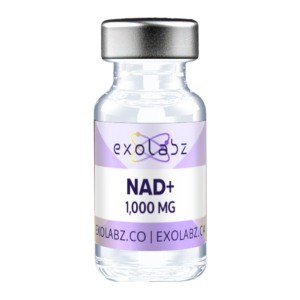 NAD+ 1000mg
 MOTS-c 10mg
 Selank 10mg