
On this page
- What we stock
- Shipping and transit
- Certificates of analysis
- Regulatory position in Canada
- Working out what to order
- Storage once it arrives
- Ordering
- What Ontario laboratories order most
- Ontario cities we ship to
- Ordering into Ontario
- HST on Ontario deliveries
- Compounds we ship to Ontario
- Common questions about ordering in Ontario
- Where else we ship
ExoLabz supplies COA-verified research peptides to laboratories, universities and independent researchers across Ontario. Ontario is the largest research market we ship into, and orders placed here move entirely within Canada — no customs step, no border delay, and no extended time at uncontrolled temperature.
All compounds are supplied for laboratory research use only. They are not for human or veterinary use.
What we stock
The catalogue is organised by compound class rather than by application, so you can work from the mechanism you are studying:
- Incretin and receptor-signalling peptides — single, dual and triple incretin receptor analogs supplied as GLP-1, GLP-2 (GLP-1/GIP) and GLP-3 (GLP-1/GIP/Glucagon)
- Growth hormone pathway peptides — GHRH analogs such as CJC-1295 and sermorelin, and secretagogue-receptor agonists such as ipamorelin
- BPC-157 and TB-500 peptides — including blends of the two
- Neuropeptides — Selank, Semax, DSIP and kisspeptin-10
- Copper peptides — GHK-Cu in two quantities
- Mitochondrial and cellular compounds — MOTS-c, SS-31 and NAD
- Melanocortin peptides — Melanotan-1, Melanotan-II and PT-141
- Multi-peptide blends — KLOW and GLOW
The full catalogue is on the shop page.
Shipping and transit
An Ontario order over $200 goes out with no shipping charge. Orders ship from within Canada, so an Ontario delivery is a domestic parcel rather than an import — the practical benefit is predictable transit time.
Lyophilised peptides are considerably more robust in transit than solutions, which is why they ship as powder. Brief exposure to ambient temperature during shipping is normal and is not equivalent to prolonged warm storage. On arrival, material should go into refrigerated storage at 2–8 °C without opening the vial. Our guide to checking a shipment on arrival sets out a short receiving routine worth following.
Certificates of analysis
Certificates of analysis are published on this website. They are not shipped inside the box.
Vials are matched to their certificate by cap and crimp colour, checked against the photographs shown on the certificate itself, since no batch number is printed on an Ontario-bound vial or any other.
Each certificate names the outside laboratory’s methods for that batch, HPLC, mass spectrometry or both, so a Toronto or Kingston lab can see exactly what was measured. Two further notes are worth reading before comparing suppliers on a purity figure alone: how to read a certificate of analysis and why two certificates can disagree on purity.
Regulatory position in Canada
These compounds are supplied as research chemicals for laboratory use. They are not approved drugs, they are not sold for human or veterinary administration, and nothing in our catalogue copy should be read as a therapeutic claim. Anyone ordering on behalf of an Ontario university, hospital or college should check that institution’s own purchasing and handling rules first. We cover the framework in more detail in our note on the regulatory status of research peptides in Canada.
Working out what to order
Two points cause more ordering errors than anything else.
The first is that a vial’s stated milligram figure is gross peptide weight, not net peptide content. Counter-ions and residual water account for a real proportion of the mass, so calculating molarity from the nominal figure overestimates concentration. This is explained in net peptide content explained and in our note on TFA and acetate counter-ions.
The second is that a blend’s total figure covers all components together. In an 80mg blend the 80mg is shared between the constituents rather than applying to each — see the KLOW blend breakdown for what that means in practice.
Storage once it arrives
Store lyophilised peptides refrigerated at 2–8 °C. Allow a sealed vial to equilibrate to room temperature for 20 to 30 minutes before opening it — a cold vial sits below the dew point of room air, and opening it condenses atmospheric moisture directly onto the powder. Material already in solution keeps far less well than the dry cake, so it belongs in the fridge and should not be kept for long.
Full guidance is in our notes on storage and stability, choosing a reconstitution solvent and aliquoting reconstituted peptides.
Ordering
Browse the full catalogue, or start from a compound class above. Bulk quantities are available on several lines. If you are comparing suppliers, our note on choosing a research peptide supplier in Canada sets out the documentation to ask for.
Every compound shipped into Ontario is a laboratory research reagent. This page offers no medical guidance and does not suggest use in people or animals.
Ontario is one of thirteen provinces and territories we ship to. See the national overview of research peptides in Canada for shipping, certificates and the full catalogue.
What Ontario laboratories order most
Ontario is the largest research market in the country, and the ordering pattern here is broader than anywhere else — a spread across the whole catalogue rather than a concentration in one class. The compound families we ship most often into the province:
- Incretin and glucagon receptor peptides — single, dual and triple receptor compounds.
- BPC-157 and TB-500 — individually and as blends.
- GHRH analogs and secretagogues — sermorelin, CJC-1295 without DAC, tesamorelin, ipamorelin.
- Copper peptides — GHK-Cu in 50 mg and 100 mg.
- Neuropeptides — Semax, Selank, DSIP, Kisspeptin-10, Epithalon.
- Mitochondrial and cellular compounds — MOTS-c, SS-31, NAD+.
- Melanocortin peptides — PT-141, Melanotan-I, Melanotan-II.
Ontario cities we ship to
Each of these has its own page covering local delivery conditions, because they genuinely differ — a parcel into a downtown Toronto condo parcel room and one onto a rural route outside London are not the same delivery:
- Toronto and the GTA — North York, Scarborough, Etobicoke, Mississauga, Brampton, Markham, Vaughan, Richmond Hill
- Ottawa — where the interprovincial boundary changes the sales tax on the order
- Hamilton and the Golden Horseshoe
- London and southwestern Ontario
The four pages differ because the conditions do: humid summers and building parcel rooms dominate in Toronto, the provincial boundary and federal receiving docks in Ottawa, gated industrial yards and the escarpment split in Hamilton, and snowbelt closures on the 401 around London. Read the one nearest your address before ordering for a time-sensitive start.
We also deliver to Kitchener–Waterloo, Guelph, Kingston, Windsor, Sudbury, Thunder Bay, Barrie, Oshawa, St. Catharines and everywhere else in the province.
Ordering into Ontario
Domestic dispatch, so no customs step, no duty and no carrier brokerage. Canadian orders over $200 CAD ship free. Certificates of analysis are published per product with photographs of the batch; vials are matched to the certificate by cap and crimp colour rather than by a printed batch number, so check the vial against the photographs before the material goes into storage, as our shipment arrival checklist describes.
Before comparing a price against a supplier outside Canada, read what cost per milligram hides and importing versus sourcing domestically: duty and brokerage on an imported parcel usually close most of an apparent saving, and net peptide content changes the arithmetic again.
HST on Ontario deliveries
An order delivered anywhere in Ontario attracts 13% HST, calculated at checkout on the delivery address rather than the billing address.
Ontario is a harmonised province, so the federal and provincial portions arrive as a single line rather than two, and the rate is Ontario’s because tax follows the destination rather than the supplier’s location.
A GST/HST-registered commercial laboratory recovers the full amount through the ordinary input tax credit. Universities, colleges and hospital authorities recover through their own arrangements; we issue invoices with the tax stated separately and quotations tax-exclusive, so either figure is available to a purchasing office.
No duty and no brokerage apply to a domestic parcel, which is the comparison that matters when an out-of-country listing looks cheaper on unit price alone.
Compounds we ship to Ontario
Ontario orders are spread across the Toronto and Ottawa corridor and the university centres, and the catalogue below ships across the province on the same terms.
- Semax 10mg $60.99
- TB-500 10mg $99.99
- BPC-157 5mg $56.99
- CJC-1295 & Ipamorelin Blend 10mg $79.99
- Tesamorelin 10mg $119.99 · restocking
For any compound, the product page lists its sequence, molecular formula and CAS number and links the independent certificate for the batch now in stock, which lets a McMaster, Western or U of T purchasing office complete its file ahead of time. All current certificates are gathered on the certificates of analysis page, and what a third-party peptide test actually measures sets out what they do and do not establish. Nothing we send into Ontario is for anything but laboratory research.
For addresses outside the four cities with their own pages — Kitchener–Waterloo, Guelph, Kingston, Windsor, Sudbury or Thunder Bay — the same receiving advice applies, with two provincial specifics. Family Day in February and the Civic Holiday in August close many receiving docks while carriers elsewhere keep working, and Northern Ontario addresses beyond Sudbury run on fewer weekly services, so an order bound for Thunder Bay in winter deserves an extra day of margin.
Common questions about ordering in Ontario
What tax line appears on an Ontario invoice?
An order delivered anywhere in Ontario attracts 13% HST, calculated at checkout on the delivery address rather than the billing address. Ontario is a harmonised province, so the federal and provincial portions arrive as a single line rather than two, and the rate is Ontario's because tax follows the destination rather than the supplier's location.
What transit should an Ontario lab plan for?
An Ontario order over $200 goes out with no shipping charge. Orders ship from within Canada, so an Ontario delivery is a domestic parcel rather than an import — the practical benefit is predictable transit time.
Who orders research peptides in Ontario?
Ontario is the largest research market in the country, and the ordering pattern here is broader than anywhere else — a spread across the whole catalogue rather than a concentration in one class.
Do you ship beyond Ontario?
Each of these has its own page covering local delivery conditions, because they genuinely differ — a parcel into a downtown Toronto condo parcel room and one onto a rural route outside London are not the same delivery: Toronto and the GTA — North York, Scarborough, Etobicoke, Mississauga, Brampton, Markham, Vaughan, Richmond Hill Ottawa — where the interprovincial boundary changes the sales.
Is there a certificate for the batch I receive?
Certificates of analysis are published on this website. They are not shipped inside the box. Vials are matched to their certificate by cap and crimp colour, checked against the photographs shown on the certificate itself, since no batch number is printed on an Ontario-bound vial or any other.
Where else we ship
Cities in Ontario
Other provinces and territories
Transit times for every province and territory · Browse the catalogue · Cost per milligram
 BPC-157 10mg
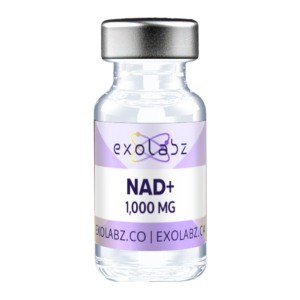 NAD+ 1000mg
 MOTS-c 10mg
 Selank 10mg