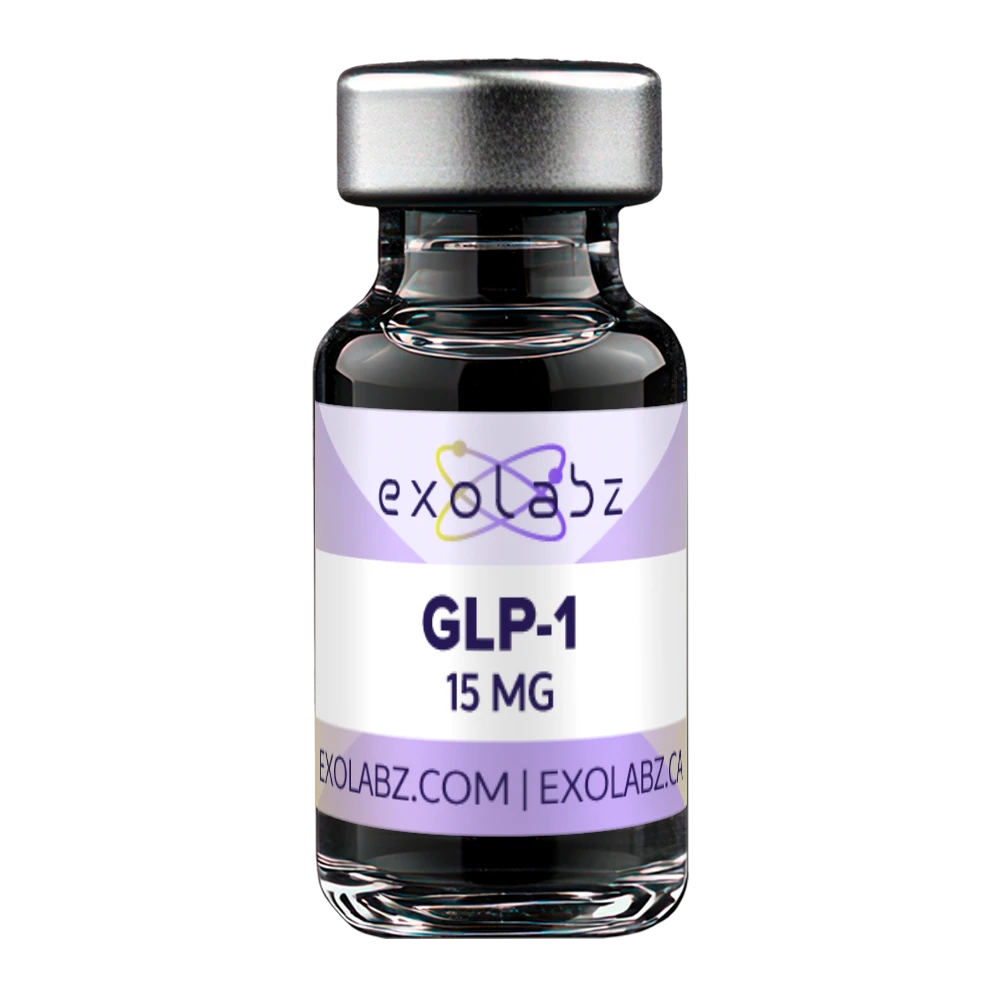
What a Third-Party Peptide Test Actually Measures
A supplier saying a peptide is “third-party tested” has told you almost nothing. The phrase covers a certificate that establishes a great deal and a certificate that establishes very little, and the difference is visible on the document itself if you know which figures to look for. This is what the common tests measure, what each one cannot tell you, and which numbers decide whether a purity figure means what it appears to mean.
Identity and purity answer different questions
Two separate questions sit behind every certificate. Is this the compound it is supposed to be, and how much of what is in the vial is that compound? Mass spectrometry answers the first. Chromatography answers the second. A certificate that reports only one of them has answered half the question, and it is usually the second half that goes missing.
What a mass spectrum settles
Electrospray ionisation gives a measured mass that can be compared against the mass calculated from the sequence. Agreement to within about a dalton is a strong identity result, because the common failure modes all shift the mass by amounts that are easy to see.
A C-terminal amide and a free acid differ by roughly 1 Da. Deamidation of an asparagine or glutamine adds 0.98 Da. Oxidation of a methionine adds 16 Da. A cyclic peptide whose ring never closed is 18 Da heavier than the finished compound, because closing the ring releases a molecule of water. Each of these is a different material from the one on the label, and each announces itself as a peak at a predictable offset.
Purity is an area percentage, not a mass percentage
An HPLC purity figure is the area of the main peak divided by the total area of all peaks the detector recorded. That is not the same as the fraction of the vial contents by weight. Two compounds present in equal amounts do not necessarily produce equal peak areas, because absorbance depends on structure. Area percent is a reasonable proxy and it is the industry convention, but it is a proxy.
The detection wavelength decides what is invisible
This is the single most useful thing to check and the one most often skipped. Peptide analysis is usually run at 214 nm or 220 nm, where the peptide bond itself absorbs, so anything peptidic shows up. Some certificates report 280 nm instead, where only tryptophan, tyrosine and to a small extent phenylalanine absorb.
At 280 nm, a peptide containing none of those residues is nearly invisible — and so is every impurity that lacks them. A 99% figure obtained at 280 nm on a sequence with no aromatic residues is not a meaningful purity result. The wavelength is printed on the chromatogram. It is worth finding.
Net peptide content, and why it is usually absent
Purity describes the peptide fraction relative to other peptide-like material. It says nothing about how much of the vial is peptide at all. The rest is counter-ion, residual water and any excipient, and the figure that accounts for it is net peptide content, determined by amino acid analysis or by nitrogen determination.
For a trifluoroacetate salt, net peptide content commonly falls between 70% and 85%. A vial can therefore be 98% pure and 78% peptide at the same time, and both numbers are honest. A certificate reporting purity without net peptide content is describing how clean the peptide is, not how much of it you have. The arithmetic is set out in net peptide content.
The counter-ion is part of what you weighed
Peptides are purified by reversed-phase chromatography using trifluoroacetic acid, and TFA leaves with the peptide as its counter-ion. It is not a contaminant in the sense of a synthesis failure; it is an expected part of the isolated salt. It does, however, contribute mass, typically in the low tens of percent, and it is one reason acetate and trifluoroacetate forms of the same peptide give different figures on the same balance. TFA and acetate counter-ions covers what changes between the two.
Residual water, measured by Karl Fischer
Lyophilisation removes most of the water and not all of it. Residual water in a freeze-dried peptide is commonly a few percent, and it is measured by Karl Fischer titration rather than inferred. It matters twice: it is mass in the vial that is not peptide, and lyophilised material is hygroscopic enough that a vial opened cold and left open gains more. Water content in lyophilised peptides goes into the measurement.
What the sample chain tells you
Every certificate is a statement about the specific sample the laboratory received. It says nothing about any other vial except by inference, and the strength of that inference depends on who selected the sample and how it travelled. A report where the supplier chose and sent the sample is a different evidentiary object from one where the material was drawn from stock by the person commissioning the test. Neither is worthless; they are simply not equivalent, and the certificate usually records which happened. Third-party versus in-house testing works through the distinction.
Why two certificates can disagree
Two laboratories testing the same material can return different purity figures without either being wrong. Column chemistry, gradient, run length, wavelength and integration settings all move the number, and a shallow gradient resolves a shoulder that a steep one buries inside the main peak. Disagreement between reports is informative rather than disqualifying. Why two certificates can disagree sets out the usual causes, and reading an HPLC chromatogram covers what a shoulder looks like.
What a certificate does not establish
A standard identity and purity certificate is silent on sterility, on endotoxin, and on anything to do with suitability for use in a person or an animal. Those require separate tests that are not part of a routine peptide certificate, and their absence is not an oversight — they were not run. Reading a purity figure as a safety statement is the most common misreading of these documents. Endotoxin, sterility and the limits of research grade is the longer version.
Commissioning a test yourself
Independent verification is available to anyone in Canada willing to pay for it. Analytical laboratories accept submitted samples for identity and purity work, and the useful version of that exercise is to send material you selected from stock yourself, specify the wavelength, and ask for the chromatogram rather than a summary figure. It is the only version of “third-party tested” where you control every step, and it costs less than most people assume.
What we publish
Every report we hold is published in full on the certificates of analysis page, reproduced as the laboratory issued it rather than summarised into a number. Certificates are not shipped with orders; a vial is matched to its certificate by cap and crimp colour against the photographs on the report itself. What we do not do is attach a purity figure to a claim about what the compound does, in a person or otherwise — the material is supplied for laboratory research use only.