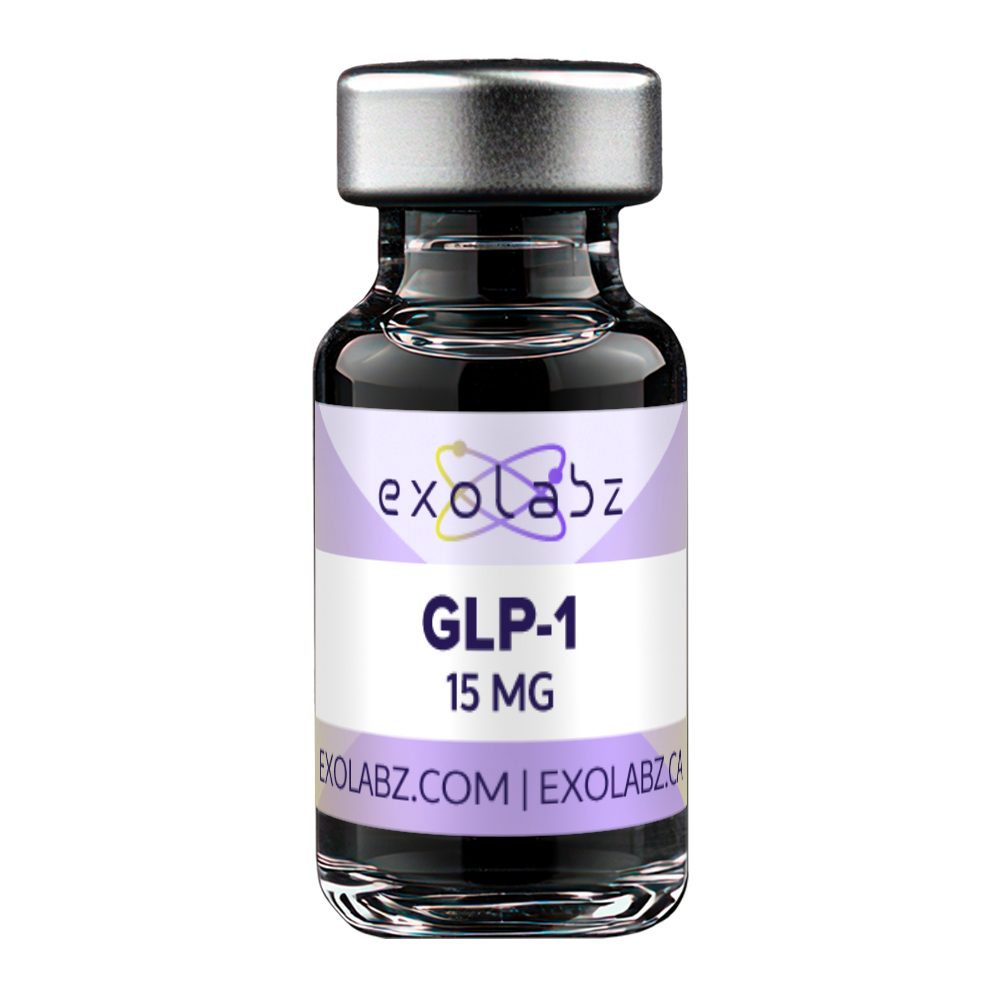
Memorial University labs in St. John’s and Corner Brook, provincial health research groups and independent researchers across Newfoundland and Labrador order certificate-backed research compounds from ExoLabz, shipped entirely within Canada so that nothing waits in customs on the way to the island.
Who orders in Newfoundland and Labrador
Almost all of the province’s research capacity belongs to a single institution. Memorial University in St John’s covers the Faculty of Medicine and the Craig L Dobbin Genetics Research Centre, the Ocean Sciences Centre at Logy Bay, and the Marine Institute, with the Grenfell campus at Corner Brook accounting for a smaller share. Research groups within the provincial health service make up most of the remainder.
That concentration simplifies things. Memorial receives centrally, so the carrier’s scan records arrival at a dock and the internal move to a laboratory follows on the university’s own schedule. Address to a department, a building and a named person, and specify the campus, since St John’s and Corner Brook are separated by most of the island. If Memorial’s purchasing office needs a quotation or a purchase order before anything is raised, ask before ordering and we will quote the compound, the quantity and the campus address you name.
What stability actually means on a certificate
An outside laboratory tests each lot, and the certificate it issues is published here before a Newfoundland or Labrador order is placed. Because the province sits at the end of the longest domestic route in Atlantic Canada, the question that comes up most often here is how long the material lasts, and the honest answer needs some unpacking.
A certificate is a measurement taken on a date, not a forecast. It says what the batch was when it was tested; it does not certify what it will be in eighteen months, because that depends entirely on how it is kept. Sealed lyophilised powder held cold and dry is stable over long periods, and the transit window into Newfoundland, even at its longest, is a small fraction of that. This is precisely why material ships dry rather than in solution: a long domestic route is a scheduling question for a powder and a stability question for a liquid.
Degradation, when it happens, is chemistry rather than the passage of time. Hydrolysis and deamidation need water, which is why residual moisture and a properly sealed vial matter more than the date. Oxidation of methionine, cysteine and tryptophan needs oxygen and is accelerated by light. Aggregation is driven by concentration and by freeze-thaw cycling, which is a property of solutions rather than powders. Each of those has a specific countermeasure, and none of them is simply ordering more often. See how peptides degrade and storage and stability.
Regulatory position, stated plainly
A Newfoundland and Labrador order buys research material for the laboratory and nothing more. No compound here has a Drug Identification Number or Canadian marketing authorisation for human use, and nothing in the catalogue is cleared for consumption or for use in clinical or veterinary work.
That boundary is what the offer consists of rather than a warning printed beside it. You will not find dosing figures here, nor protocols involving people or animals, nor claims about benefit or outcome, and a request for any of them will be declined. Memorial’s own requirements, and the provincial and federal rules that govern the work, are for the purchaser to meet. For the wider framework, read where research peptides stand under Canadian regulation.
What Newfoundland and Labrador laboratories order most
Every category ships to the island and to Labrador alike:
- Incretin & Glucagon Peptides
- Growth Hormone Secretagogues — analogues of GHRH and agonists at the ghrelin receptor
- BPC-157 & TB-500 Peptides
- Mitochondrial & Cellular Compounds
- Neuropeptides
- Melanocortin Peptides
- Copper Peptides
- Multi-Peptide Blends
An island route, and the longest domestic transit in Atlantic Canada
This is the province where the last leg matters most in the east. A parcel to St. John’s crosses to the island by air or by ferry, and that leg is a scheduled service rather than a road route: arrival times cluster rather than spreading smoothly, and a missed connection costs a day rather than an hour.
Expect the Halifax window plus a day or two, and add margin in winter, when Atlantic weather interrupts both the air and the marine legs several times a season. Onward delivery to Labrador is a further scheduled leg again. We ship to St. John’s, Mount Pearl, Corner Brook, Grand Falls-Windsor, Gander, Labrador City and the rest of the province.
None of that troubles lyophilised powder, which is shipped dry precisely so a transit window of a few days is unremarkable. It matters for scheduling rather than for the material — see what to check when a shipment arrives.
A practical scheduling note
Newfoundland runs half an hour ahead of Atlantic time, which sounds trivial and occasionally is not: a same-day dispatch cut-off quoted in Atlantic time is half an hour earlier than it looks from here. If a delivery is time-critical, order the day before rather than against the cut-off.
HST on Newfoundland and Labrador orders
Delivery anywhere from St. John’s to Labrador City carries 15% HST, set at checkout from the shipping address and shown on one harmonised line.
Memorial and other GST/HST registrants claim that back as an input tax credit, so a research budget effectively carries the pre-tax price.
There is no duty and no brokerage either. On a route this long, that is the point to hold onto: the distance changes the schedule, not the bill.
Compounds we ship to Newfoundland and Labrador
- SERMORELIN 5mg $89.99
- IPAMORELIN 5mg $64.99
- GLOW 70mg $169.99 · restocking
- AOD-9604 5mg $79.99
- SELANK 10mg $79.99
- GHK-CU 50mg $59.99
Compounds we ship to Newfoundland and Labrador
St. John’s takes most Newfoundland and Labrador volume, and every compound in the categories above ships on the same domestic service.
The eight categories above take the place of a long product list; open any of them and each listing shows its sequence, molecular formula and CAS number and links the third-party certificate covering the lot now in stock. The certificates of analysis archive holds the full set, so a Memorial group can attach the record to a requisition while the order is still being approved, and what an independent peptide test establishes explains the chromatogram and mass figures on each one.
The island route shapes the ordering habits that work here. Grouping compounds into one shipment reduces the number of air or ferry connections a project depends on, and ordering before the winter storm season starts removes most of the uncertainty. When the parcel reaches the Health Sciences Centre, the Ocean Sciences Centre at Logy Bay or the Grenfell campus, store the certificate with the vials, and note in the lab record when a reorder brings a new lot, since each certificate covers one lot only. Everything sent to the province is supplied for laboratory research use only.
Common questions about ordering in Newfoundland and Labrador
Which tax rate applies in Newfoundland and Labrador?
Delivery anywhere from St. John’s to Labrador City carries 15% HST, set at checkout from the shipping address and shown on one harmonised line. Memorial and other GST/HST registrants claim that back as an input tax credit, so a research budget effectively carries the pre-tax price.
How long does delivery to Newfoundland and Labrador take?
This is the province where the last leg matters most in the east. A parcel to St. John's crosses to the island by air or by ferry, and that leg is a scheduled service rather than a road route: arrival times cluster rather than spreading smoothly, and a missed connection costs a day rather than an hour.
Which Newfoundland and Labrador organisations buy from you?
Almost all of the province's research capacity belongs to a single institution. Memorial University in St John's covers the Faculty of Medicine and the Craig L Dobbin Genetics Research Centre, the Ocean Sciences Centre at Logy Bay, and the Marine Institute, with the Grenfell campus at Corner Brook accounting for a smaller share.
Is there a certificate for the batch I receive?
An outside laboratory tests each lot, and the certificate it issues is published here before a Newfoundland or Labrador order is placed. Because the province sits at the end of the longest domestic route in Atlantic Canada, the question that comes up most often here is how long the material lasts, and the honest answer needs some unpacking.
Is any of this intended for administration?
A Newfoundland and Labrador order buys research material for the laboratory and nothing more. No compound here has a Drug Identification Number or Canadian marketing authorisation for human use, and nothing in the catalogue is cleared for consumption or for use in clinical or veterinary work.