
Description
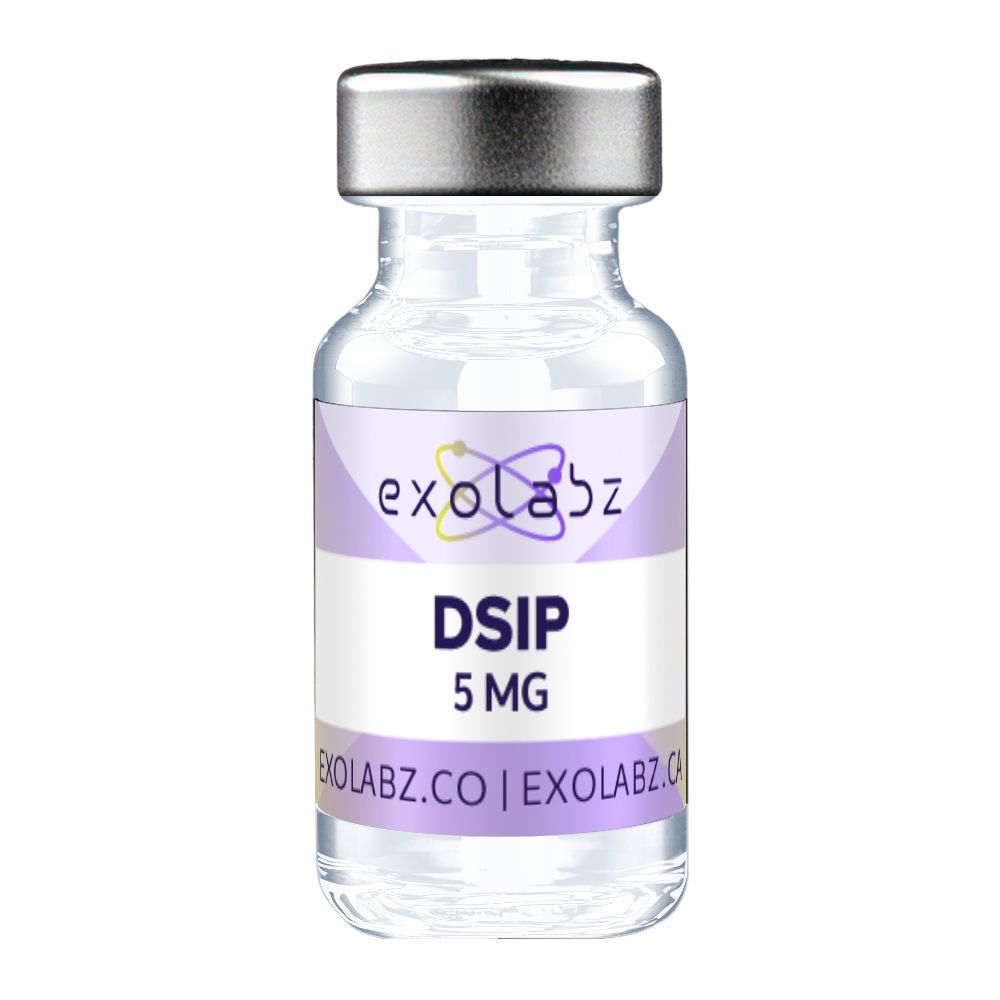
DSIP (Delta Sleep-Inducing Peptide) 5mg – Research Peptide
DSIP (Delta Sleep-Inducing Peptide) 5mg is a high-purity, research-grade peptide supplied for controlled laboratory investigation at 99%+ purity involving neuropeptide signaling, circadian rhythm biology, and neuroendocrine pathway analysis.
The compound is written several ways — delta sleep-inducing peptide, delta sleep inducing peptide, and the abbreviation DSIP. All refer to the same nonapeptide, Trp-Ala-Gly-Gly-Asp-Ala-Ser-Gly-Glu.
Delta Sleep-Inducing Peptide is referenced in scientific literature as an endogenous peptide associated with neurochemical pathways studied in relation to sleep-stage signaling and circadian rhythm models. Research involving DSIP has examined peptide activity within central nervous system signaling systems and neuroendocrine pathways.
DSIP 5mg is supplied exclusively for in-vitro laboratory research and analytical investigation. This compound is not approved for human or veterinary use.
What Is DSIP?
Delta Sleep-Inducing Peptide (DSIP) is a short-chain peptide identified in early neurochemical research involving sleep-stage signaling.
Scientific literature referencing DSIP has examined its presence in experimental models involving:
• Circadian rhythm signaling pathways and molecular models
• Delta-wave sleep-stage signaling
• Neuroendocrine communication systems and pathway analysis
• Stress-associated neurochemical pathways
• Central nervous system peptide signaling and interaction studies
• Peptide structure and stability analysis
These topics represent areas of ongoing experimental investigation within laboratory environments.
DSIP 5mg – Research Supply Specifications
• Synthetic research peptide
• 5mg lyophilized peptide per vial
• Analytical purity standard: 99%+
• Third-party laboratory testing for identity and purity
• Manufactured under controlled quality standards
• Canada-based fulfillment
• Batch-level quality verification
Purity & Quality Assurance
ExoLabz provides research peptides manufactured to high analytical standards. ExoLabz products undergo independent third-party testing to verify peptide identity and purity. Results are published on this site.
Researchers may perform additional analytical verification if required for laboratory use. If validated testing confirms a verified purity discrepancy, ExoLabz provides refund and testing reimbursement in accordance with company policy.
Important Legal Notice
For Research Purposes Only
DSIP 5mg is supplied strictly for laboratory research and analytical use.
This compound is not intended for human consumption, veterinary use, clinical research involving human subjects, therapeutic use, or diagnostic applications.
This product has not been evaluated or approved by Health Canada, the U.S. Food and Drug Administration (FDA), or any other regulatory authority.
By purchasing this product, the buyer confirms that the material will be handled only by qualified professionals and used solely for lawful laboratory research purposes.
Compound identity and specification
Identity data for DSIP, published so the material can be checked against an independent record rather than taken on trust. The formula, mass and registry number below are verified against PubChem and can be looked up directly.
| Compound | DSIP |
|---|---|
| Sequence | Trp-Ala-Gly-Gly-Asp-Ala-Ser-Gly-Glu (WAGGDASGE) |
| Molecular formula | C35H48N10O15 |
| Molecular mass | 848.8 g/mol |
| CAS registry number | 62568-57-4 |
| PubChem | CID 68816 |
| Vial content | 5 mg |
| Physical form | Lyophilised powder in a sealed vial |
| Analysis | Third-party HPLC; the result for this product is published on this page |
| Supplied for | Laboratory research use only |
Analytical note — DSIP. Nine residues, two of them acidic, and a single tryptophan. That tryptophan is the analytical handle: it gives a 280 nm signal, and oxidised tryptophan adds 16 Da and typically resolves as a distinct earlier peak.
Identity references The molecular formula, molecular mass and CAS registry number above are taken from the PubChem record linked in the table, not from a supplier datasheet, so every figure can be checked against an independent source in one click. Sequences are given as reported in the peptide literature, in the one-letter or three-letter convention as appropriate, with any non-standard residue named in full. Where a compound exists in more than one form — a free peptide and a metal complex, a fragment and its parent protein, a modified and an unmodified analog — the form supplied is the one identified here, and the mass on the certificate of analysis is what distinguishes it.
Research Literature
Peer-reviewed studies involving this compound and its class. All findings listed are from in vitro, cell culture or animal models and are provided for scientific reference only. This product is supplied for laboratory research and is not approved for human consumption, clinical, or veterinary use.
- Nakamura A, et al. J Neurochem. 1991;57(3):1013-1018. In rat medullary and regional brain synaptosomes, measured calcium-dependent, tetrodotoxin-insensitive Met-enkephalin release and calcium uptake. Source · PMID 1861139
- Nakamura A, et al. Neuropeptides. 1993;24(3):131-138. In rat brain synaptosome preparations, measured depolarisation-evoked release and aminopeptidase-mediated degradation. Source · PMID 8474631
- Iyer KS, McCann SM Neuroendocrinology. 46(1):93-95. In rat median eminence tissue in vitro, measured dose-dependent inhibition of somatostatin release, blocked by the dopamine antagonist pimozide. Source · PMID 2886936
Literature notes: The publication year for Iyer and McCann is recorded inconsistently across indexes; the identifiers are confirmed.
The third-party report for this material is published on this page, and every certificate we hold is collected on the certificates of analysis page.
Related Research Compounds
Browse more compounds in Neuropeptides, or view the full research peptide catalogue.
 BPC-157 10mg
 NAD+ 1000mg
 MOTS-c 10mg
 Selank 10mg
Reviews
No reviews for this product yet. Here is what customers say about ExoLabz.