
Description
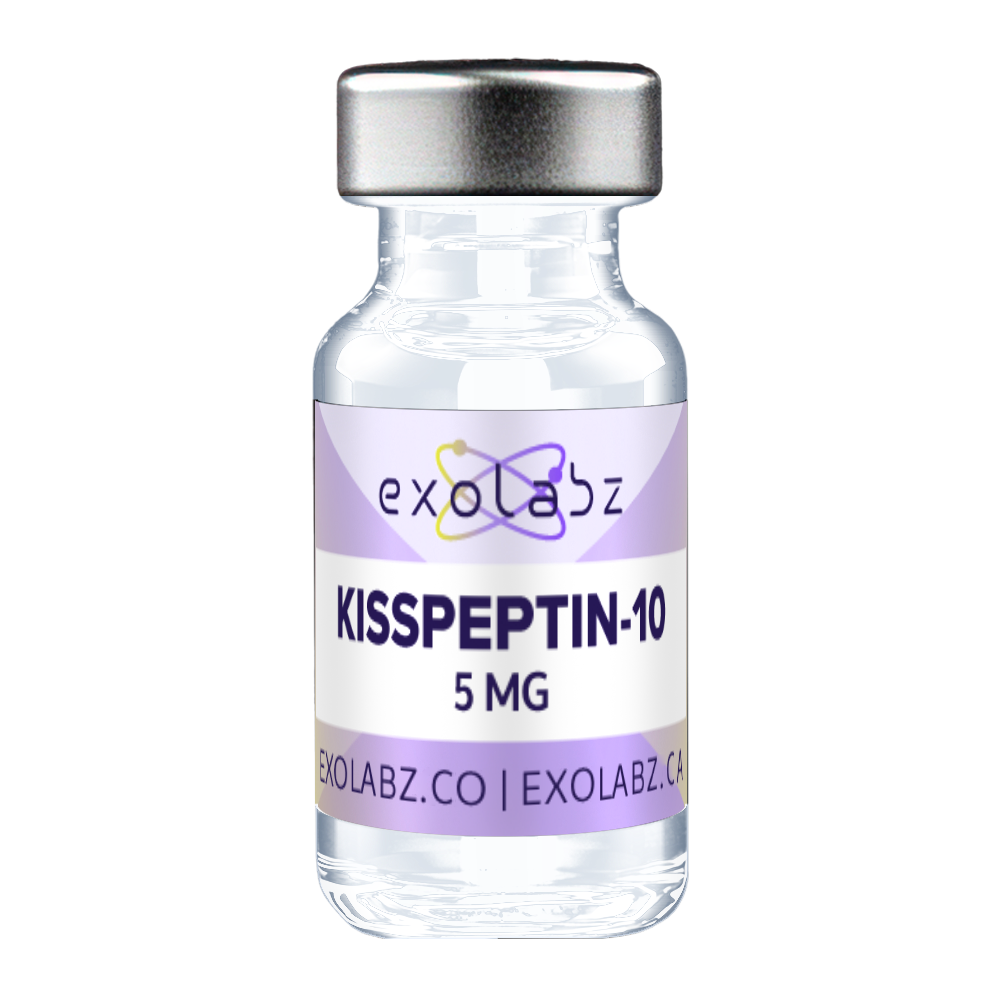
Kisspeptin-10 5mg – Research Peptide
Kisspeptin-10 5mg is a high-purity, research-grade peptide supplied for controlled laboratory investigation at 99%+ purity involving neuroendocrine signaling pathways and peptide-receptor interactions.
Kisspeptin peptides are referenced in scientific literature examining molecular pathways associated with hypothalamic signaling and the hypothalamic-pituitary-gonadal (HPG) axis. Kisspeptin-10 represents a biologically active fragment derived from peptides encoded by the KISS1 gene.
This compound has been discussed in research contexts involving gonadotropin-releasing hormone (GnRH) neuron signaling and neuroendocrine regulatory pathways.
Kisspeptin-10 5mg is provided strictly for in-vitro laboratory research and analytical investigation. This material is not approved for human or veterinary use.
What Is Kisspeptin-10?
Kisspeptin-10 is a short peptide fragment derived from kisspeptin peptides encoded by the KISS1 gene and associated with signaling through the GPR54 receptor (KISS1R).
In published scientific literature, kisspeptin peptides have been examined in experimental research involving neuroendocrine communication pathways and hormone-related signaling mechanisms within the hypothalamic-pituitary-gonadal axis.
Areas referenced in research literature include:
• Hypothalamic neuropeptide signaling
• Gonadotropin-releasing hormone (GnRH) pathway models
• Hormone feedback signaling systems
• Reproductive neuroendocrine regulatory pathways
• Puberty-related signaling mechanisms
• Hypothalamic-pituitary-gonadal (HPG) axis signaling pathways
• Peptide-receptor interaction studies involving KISS1R
• Neuroendocrine communication between hypothalamic and pituitary systems
• Hormone signaling feedback mechanisms
These topics remain areas of ongoing laboratory investigation.
Kisspeptin-10 5mg – Research Supply Specifications
• Synthetic research peptide
• 5mg lyophilized peptide per vial
• Analytical purity standard: 99%+
• Third-party laboratory testing for identity and purity
• Manufactured under controlled quality standards
• Canada-based fulfillment
• Batch-level quality verification
Purity & Quality Assurance
ExoLabz provides research peptides manufactured to high analytical standards. ExoLabz products undergo independent third-party testing to verify peptide identity and purity. Results are published on this site.
Researchers may conduct additional analytical verification if required for laboratory use. If validated testing confirms a verified purity discrepancy, ExoLabz provides refund and testing reimbursement in accordance with company policy.
Important Legal Notice
For Research Purposes Only
Kisspeptin-10 5mg is supplied strictly for laboratory research and analytical use.
This compound is not intended for human consumption, veterinary use, clinical research involving human subjects, therapeutic use, or diagnostic applications.
This product has not been evaluated or approved by Health Canada, the U.S. Food and Drug Administration (FDA), or any other regulatory authority.
By purchasing this product, the buyer confirms that the material will be handled only by qualified professionals and used solely for lawful laboratory research purposes.
Compound identity and specification
Identity data for Kisspeptin-10, published so the material can be checked against an independent record rather than taken on trust. The formula, mass and registry number below are verified against PubChem and can be looked up directly.
| Compound | Kisspeptin-10 |
|---|---|
| Sequence | Tyr-Asn-Trp-Asn-Ser-Phe-Gly-Leu-Arg-Phe-NH2 (YNWNSFGLRF amide) |
| Molecular formula | C63H83N17O14 |
| Molecular mass | 1302.4 g/mol |
| CAS registry number | 374675-21-5 |
| PubChem | CID 25240297 |
| Vial content | 5 mg |
| Physical form | Lyophilised powder in a sealed vial |
| Analysis | Third-party HPLC; the result for this product is published on this page |
| Supplied for | Laboratory research use only |
Analytical note — Kisspeptin-10. The C-terminus is amidated, one Da lighter than the corresponding free acid, and the free acid is a known synthesis by-product. Tryptophan, tyrosine and two phenylalanines make it strongly ultraviolet-active at 280 nm.
Identity references The molecular formula, molecular mass and CAS registry number above are taken from the PubChem record linked in the table, not from a supplier datasheet, so every figure can be checked against an independent source in one click. Sequences are given as reported in the peptide literature, in the one-letter or three-letter convention as appropriate, with any non-standard residue named in full. Where a compound exists in more than one form — a free peptide and a metal complex, a fragment and its parent protein, a modified and an unmodified analog — the form supplied is the one identified here, and the mass on the certificate of analysis is what distinguishes it.
Research Literature
Peer-reviewed studies involving this compound and its class. All findings listed are from in vitro, cell culture or animal models and are provided for scientific reference only. This product is supplied for laboratory research and is not approved for human consumption, clinical, or veterinary use.
- Kotani M, et al. J Biol Chem. 2001;276(37):34631-34636. In transfected cells, measured low-nanomolar binding affinity at GPR54 with phosphoinositide hydrolysis, calcium mobilisation and MAPK phosphorylation. Source · PMID 11457843
- Han SK, et al. J Neurosci. 2005;25(49):11349-11356. In mouse brain slices, measured depolarisation of GnRH neurons and GPR54/KiSS-1 mRNA expression across postnatal ages. Source · PMID 16339030
- Liu X, et al. Endocrinology. 2008;149(9):4605-4614. In mouse GnRH neurons, measured membrane potential, firing rate, intracellular calcium and ion-channel contributions, attenuated by PLC/IP3 blockade. Source · PMID 18483150
The third-party report for this material is published on this page, and every certificate we hold is collected on the certificates of analysis page.
Related Research Compounds
Browse more compounds in Neuropeptides, or view the full research peptide catalogue.
 BPC-157 10mg
 NAD+ 1000mg
 MOTS-c 10mg
 Selank 10mg
Reviews
No reviews for this product yet. Here is what customers say about ExoLabz.